Thailand for a Month: Where to Stay, What It Costs & Best Beach Towns
A practical planning guide to spending roughly four weeks in Thailand: realistic monthly costs, where to base yourself, which beach towns and islands suit longer stays, and four sample itineraries.
By BeachLoco Editorial Team
A month in Thailand is a different trip from a two-week vacation. Instead of racing between three islands and an overnight in Bangkok, four weeks lets you settle into one or two coastal bases, take day trips instead of packing every third morning, and treat the country as somewhere to live briefly rather than tick off. This guide covers what a month realistically costs, where to stay, which Thai beach towns work for longer stays, and how to divide four weeks without spending half of them in transit.
Is One Month in Thailand Too Long?
For most travelers, no — but the reason is worth understanding before you book. Thailand's distances are deceptive. Bangkok to Phuket is roughly 850 km, Phuket to Koh Samui crosses the country from the Andaman Sea to the Gulf of Thailand, and the ferry-plus-transfer days between islands routinely swallow six to nine hours door to door. On a ten-day trip, those transfers are a meaningful share of the holiday. On a 30-day trip, they are a rounding error.
Four weeks changes the arithmetic in four practical ways:
- Fewer transfers, longer stays. Three bases of eight to ten nights each beats seven bases of three nights, and usually costs less.
- Weekly and monthly accommodation rates. Most Thai guesthouses, apartments and smaller resorts discount stays of seven nights or longer, and the discount deepens at 28 to 30 nights.
- Weather flexibility. With a month in hand you can shift between the Andaman and Gulf coasts if conditions turn, rather than being locked into whichever coast you booked.
- Room for slow days. Laundry, a haircut, a gym, a repeat breakfast place — the ordinary things that make a long trip sustainable instead of exhausting.
A month suits solo travelers, couples with flexible leave, remote workers on stable connections, and anyone combining a longer vacation with a shoulder-season budget. It suits fixed-schedule travelers less well: if you need every day programmed, the same four weeks can feel loose. Neither approach is better — they are different trips.
How Much Does a Month in Thailand Cost?
Costs vary far more by destination and season than by country. The figures below are planning estimates in US dollars for one person over 30 days, excluding international flights, and assume shoulder-to-high-season pricing. They are ranges, not quotes — verify current rates before you commit.
| Category | Budget | Comfortable | Higher-end |
|---|---|---|---|
| Accommodation (30 nights) | $300–$650 | $750–$1,600 | $2,500+ |
| Food and drink | $250–$400 | $450–$800 | $1,200+ |
| Local transport (songthaew, Grab, scooter hire) | $60–$110 | $120–$250 | $400+ |
| Domestic flights and ferries | $60–$150 | $150–$350 | $500+ |
| Tours and activities | $80–$200 | $250–$500 | $900+ |
| Nightlife and entertainment | $40–$150 | $150–$400 | $800+ |
| SIM, laundry, pharmacy, miscellaneous | $50–$90 | $90–$180 | $250+ |
| Approximate monthly total | $850–$1,700 | $2,000–$4,000 | $6,500+ |
Where those numbers move most:
- Bangkok is inexpensive for food and transport but has a wide accommodation spread — hostels and serviced studios are cheap, riverside hotels are not.
- Phuket is Thailand's most price-segmented beach destination. Patong and Kata run near the national average; Bang Tao, Surin and Kamala carry a clear resort premium.
- Koh Samui tends to sit above the mainland on both lodging and dining because most supplies arrive by boat, and taxi pricing on the island is notoriously high.
- Krabi town, Koh Lanta and Hua Hin are usually the cheapest of the well-known coastal bases for long stays.
- Season can swing beach accommodation by 40 to 60 percent between the December–February peak and the wettest months.
Two costs travelers underestimate: island taxis, which are often fixed-price and expensive relative to everything else, and the cumulative price of day tours if you book one every few days for a month.
Where to Stay for a Month in Thailand
Accommodation type matters more on a 30-day trip than on a one-week trip, because the trade-offs compound.
- Hotels and resorts. Best for shorter blocks inside a longer trip — daily housekeeping, breakfast, a pool and no admin. Full-month resort stays are the most expensive way to do this, though many properties will negotiate on stays over two weeks in low season.
- Serviced apartments and aparthotels. Common in Bangkok, Phuket and Hua Hin. A kitchenette, a desk and laundry access make a two- to four-week stay far more livable, usually at a lower nightly rate than an equivalent hotel.
- Guesthouses and small beachfront resorts. The dominant option on islands like Koh Lanta and Koh Phangan. Many quote a discounted weekly or monthly rate directly if you email them.
- Monthly rentals. Condos and villas rented on a 30-day basis are the cheapest per night in places with a resident foreign population — Phuket, Hua Hin, Koh Samui and Bangkok. They usually require more upfront coordination, a deposit, and acceptance that utilities are billed separately.
One base or several? One base makes sense if you are working remotely, travelling on a tighter budget, or want the routine of a single place. Two or three bases of nine to twelve nights each is the more common structure for a first month, since it covers different coasts and atmospheres without constant movement. Booking your first week firmly and leaving later weeks flexible is a reasonable middle path outside the December–February peak, when availability tightens and last-minute rates rise.
Best Beach Towns and Islands for a Longer Stay
These are the Thai coastal destinations that support a stay of a week or more — places with a functioning town behind the beach, not just a resort strip.
Phuket
Phuket is an island the size of Singapore, and treating it as one destination is the most common planning mistake. Its west coast beaches differ sharply:
- Patong — the busiest, loudest and cheapest for nightlife and casual food. Good beach, heavy development, a lot of traffic.
- Karon and Kata — long sandy beaches with a mid-range town behind them. Popular with returning long-stay visitors and families.
- Kamala, Surin and Bang Tao — quieter and more expensive, with resort and villa inventory and a slower evening scene.
- Rawai and Nai Harn — the southern residential side, favoured by long-stay residents. Rawai's shoreline is not a swimming beach; Nai Harn nearby is.
- Phuket Town — Sino-Portuguese old town, the island's best everyday dining and lowest rents, but a 20 to 30 minute drive from the beaches.
Phuket has Thailand's best beach-destination infrastructure: an international airport with direct regional flights, real hospitals, supermarkets and reliable internet. Costs are mid to high. Transport is the weak point — taxis are expensive and public options limited, so most long-stay visitors rent a scooter or car. Best for travelers who want choice and convenience, and who will pick an area rather than "Phuket" in general.
Koh Samui
Koh Samui is more contained than Phuket and easier to read. Chaweng is the main beach and nightlife strip, Lamai is a smaller and slightly cheaper version, Bophut's Fisherman's Village leans toward restaurants and boutique stays, and the south and west coasts are quiet with weaker swimming beaches in places. The island has its own airport, which shortens arrival days but keeps fares high; the ferry-and-bus alternative from Surat Thani is much cheaper and much slower.
Dining is strong and varied, nightlife is present but less intense than Patong, and the island suits couples and longer stays where you want a settled, comfortable base. Costs run above the mainland. Best for travelers prioritising comfort, restaurants and Gulf-coast weather timing.
Krabi and Ao Nang
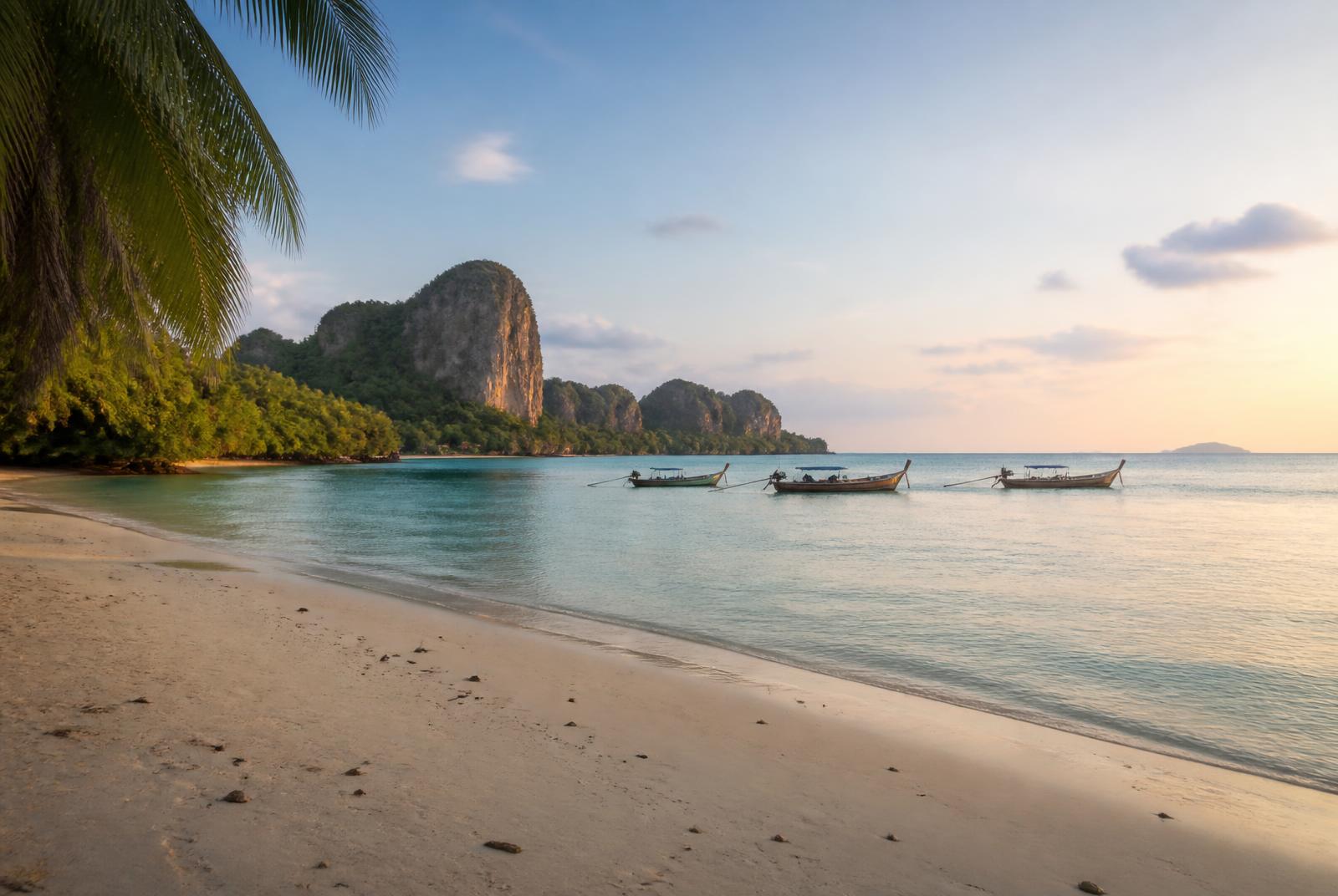
Krabi province is the mainland gateway to the Andaman's limestone scenery. Ao Nang is the practical base: a walkable beachfront town with a good spread of mid-range accommodation, a long restaurant strip and boat piers for Railay, the Phi Phi islands and Hong Island. Railay itself, reachable only by boat, is dramatic and calm but limited for a long stay. Krabi Town, inland on the river, is cheaper still and better for a resident-style month, though not a beach base.
Beach quality is good rather than exceptional at Ao Nang itself — the scenery and day trips are the draw. Nightlife is modest. Costs are below Phuket and Samui, and Krabi's airport plus decent minivan links make onward travel straightforward. Best for travelers who want island-hopping access without island prices.
Koh Lanta
Koh Lanta is one of the strongest long-stay islands in the country: long west-facing beaches, low-rise development, a functioning local economy and a well-established seasonal community of remote workers. Long Beach (Phra Ae) and Klong Khong have the most inventory; the south around Kantiang Bay is quieter and more scenic. There is no airport — arrival is by ferry or a road transfer from Krabi.
Nightlife is limited to beach bars and small restaurants. Costs are among the lowest of the well-known islands, especially for monthly bungalow and apartment rentals. Note the strong seasonality: much of the island winds down during the wettest Andaman months. Best for quieter long stays, sunsets, and travelers who want simplicity over infrastructure.
Hua Hin
Hua Hin is on the Gulf coast about three to four hours by road or rail from Bangkok, which makes it the easiest long-stay beach base to reach without a domestic flight. It is a real town with a long-standing Thai and expatriate resident population: condominiums, supermarkets, hospitals, golf courses and night markets. The beach is long and swimmable but not the country's most photogenic — this is a livability choice, not a postcard one.
Costs are moderate and monthly condo rentals are widely available. Nightlife is low-key and restaurant-led. Best for remote workers, couples on longer stays, and anyone who values everyday convenience and easy Bangkok access over island scenery.
Pattaya and Jomtien
Pattaya is roughly two hours from Bangkok and is the most polarising destination on this list. Central Pattaya is dense, commercial and known for nightlife. Jomtien, immediately south, is a different proposition: a longer, calmer beach, a heavy concentration of condominium rentals and one of the cheapest monthly accommodation markets in coastal Thailand. Naklua to the north is quieter again.
Beach quality is modest by Thai standards, and better swimming is found on nearby Koh Larn. Infrastructure, healthcare and food options are excellent for the price. Best for affordability, convenience to Bangkok, and travelers who specifically want the nightlife — or who want Jomtien's low rents and can ignore the rest.
Koh Phangan
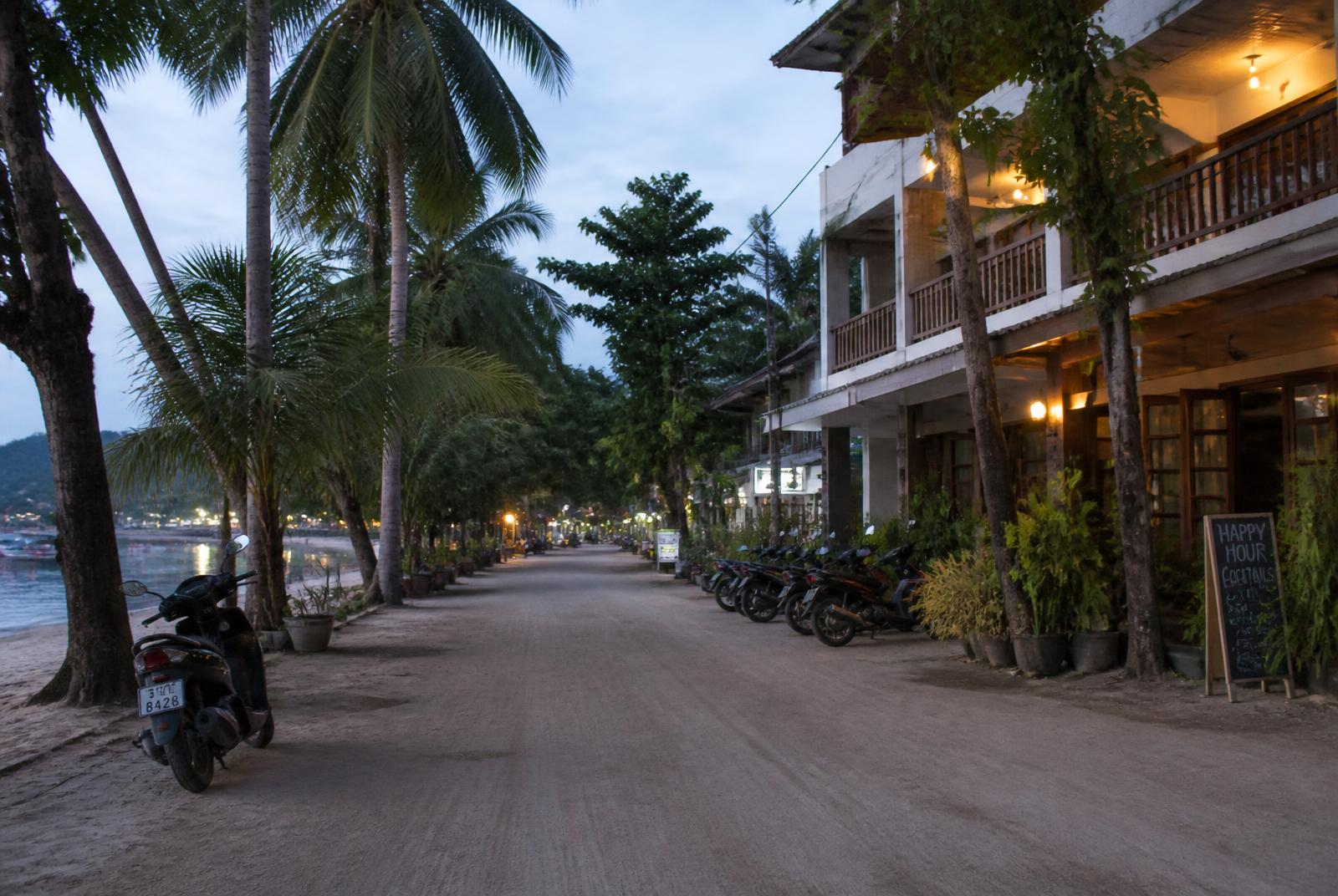
Koh Phangan has two distinct identities. Haad Rin is the Full Moon Party beach and books out around the lunar calendar. The rest of the island — Sri Thanu, Chaloklum, Bottle Beach and the north coast — is quiet, wellness-oriented and home to a large seasonal community of long-stay visitors, yoga schools and coworking spaces. Access is by ferry from Koh Samui or Surat Thani.
Costs are moderate, roads in the interior are steep and in variable condition, and healthcare is limited compared with Samui. Best for travelers who want either a strong social scene or a genuinely quiet wellness-focused month, provided they choose the right side of the island.
Other coastal options
Koh Chang, in the east near the Cambodian border, is forested and comparatively undeveloped, with the Gulf's weather pattern and easy bus access from Bangkok. Koh Tao is small and diving-led, excellent for a certification block but tight for a full month. Khao Lak, north of Phuket, is calm, family-oriented and the main departure point for Similan Islands trips in season. Our Thailand beaches guide covers individual beaches in more detail.
Best Thai Beach Destination by Travel Style
No destination wins across the board. These are fit-for-purpose picks, not rankings.
- First-time visitors: Phuket or Krabi — the widest range of accommodation, transport and day trips in one place.
- Nightlife: Patong in Phuket, central Pattaya, or Haad Rin on Koh Phangan around the full moon.
- Quieter long stays: Koh Lanta, northern Koh Phangan, or Khao Lak.
- Island living: Koh Lanta and Koh Phangan, where a month feels like residency rather than a holiday.
- Affordability: Jomtien, Krabi Town and Koh Lanta for monthly rates; Bangkok for food and transport.
- Couples: Koh Samui's Bophut, Phuket's Kamala and Surin, or Railay for a shorter romantic block.
- Solo travelers: Koh Tao, Koh Phangan and Ao Nang, where hostels and group tours make meeting people straightforward.
- Convenient infrastructure: Phuket and Hua Hin — hospitals, supermarkets, reliable internet and easy transport links.
- Snorkeling and diving: Koh Tao for training and cost, the Similan Islands from Khao Lak in season for the best Andaman visibility, and Koh Lanta for reachable reef trips. See our Thailand snorkeling guide for specifics.
Sample 4-Week Thailand Itineraries
Four workable structures. Each keeps travel days low and stays geographically coherent.
First-Time Thailand Month
Bangkok 4 nights → Chiang Mai 5 nights → Phuket or Krabi 10 nights → Koh Lanta or Phi Phi 8 nights → fly home from Phuket or Krabi. Two internal flights, one ferry. Covers the city, the north and the Andaman coast without doubling back.
Beach-Focused Month
Bangkok 2 nights → Krabi/Ao Nang 8 nights → Koh Lanta 10 nights → Phuket 8 nights. One coast, one weather system, ferries and road transfers only, and enough time in each base to find a routine.
Slow-Travel Month
Two bases: Hua Hin or Koh Lanta for 15 nights, then Koh Phangan or Phuket for 13 nights. Monthly-style accommodation rates apply at both ends, one transfer in the middle, and the lowest total transport cost of any option here.
Social and Nightlife Month
Bangkok 4 nights → Pattaya 5 nights → Koh Samui 8 nights → Koh Phangan 8 nights (timed to a full moon if that matters to you) → Bangkok 3 nights. Gulf coast throughout, which simplifies both ferries and weather planning.
Solo Travel and Meeting People
A month is long enough that the social side matters. The practical levers are the same regardless of who you are travelling as:
- Social accommodation. Hostels with common areas and organised dinners remain the fastest route to company; many Thai islands also have small "flashpacker" properties with private rooms and shared spaces.
- Group day tours. Island-hopping boats, cooking classes and snorkeling trips reliably produce a day's worth of company and often more.
- Diving and course-based activities. A multi-day certification or a yoga or Muay Thai course builds a repeat group rather than one-off encounters.
- Coworking spaces. Established in Phuket (Rawai, Chalong, Phuket Town), Koh Lanta, Koh Phangan and Chiang Mai, and usually the easiest way to meet people staying longer than a week.
- Beach clubs and evening venues. Effective in Phuket, Samui and Pattaya, and a poor fit on the quieter islands, where bar-and-restaurant socialising is the norm.
Standard travel awareness applies as anywhere: keep an eye on drinks, agree transport prices before you set off, be cautious with scooters and alcohol, and let someone know your plans on remote day trips. For a deeper perspective on independent travel here, read our guide to why single women love travelling in Thailand.
Getting Around Thailand During a Month-Long Trip
- Domestic flights. Thailand's low-cost carriers connect Bangkok with Phuket, Krabi, Samui, Chiang Mai and Hat Yai cheaply and frequently. On a month-long trip, flying is worth it when the alternative is a 10-hour-plus surface day — Bangkok to the Andaman coast, or crossing between the two coasts.
- Trains. Useful south to Hua Hin and Surat Thani and north to Chiang Mai. Slower than flying, but sleeper services save a night's accommodation and are more comfortable than overnight buses.
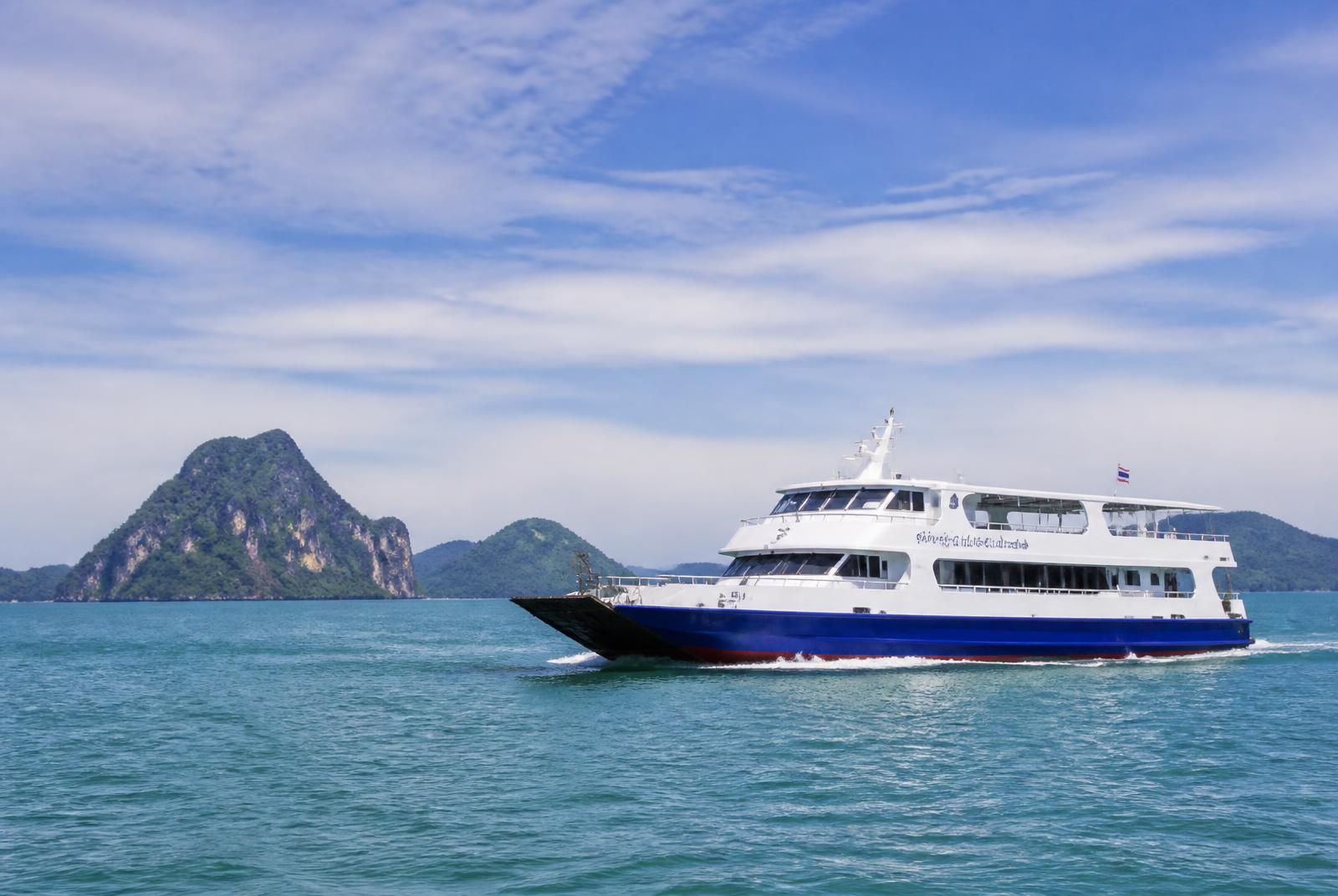
- Ferries. The backbone of island travel. Schedules thin out in the wettest months and services can be suspended in rough conditions, so avoid booking a same-day onward flight after a long ferry leg.
- Buses and minivans. Cheap and comprehensive, including combined bus-and-boat tickets. Minivans are faster and tighter; buses are slower and more comfortable.
- Taxis and ride-hailing. Grab works well in Bangkok, Phuket, Pattaya, Hua Hin and Chiang Mai. On smaller islands, expect fixed-price local taxis and songthaews instead, often at surprisingly high rates.
- Scooters. Ubiquitous and cheap, but legally you need a licence valid for motorcycles — typically an International Driving Permit with the motorcycle category — and travel insurance generally will not pay out if you were riding unlicensed. Helmets are mandatory, and road injuries are a genuine risk. Skip it if you have not ridden before.
- Rental cars. Worth considering in Phuket, Hua Hin, Khao Lak and Koh Chang, where distances are real and a scooter is not appealing. Driving is on the left.
Best Time for a Month in Thailand
Thailand does not have one nationwide beach season, and on a 30-day trip that difference is an advantage rather than a complication.
- Andaman coast (Phuket, Krabi, Koh Lanta, Khao Lak, Phi Phi): driest and calmest roughly November to April, with the southwest monsoon bringing the wettest and roughest conditions around May to October. Sea visibility for diving is best in the dry months.
- Gulf of Thailand (Koh Samui, Koh Phangan, Koh Tao): a different pattern. Conditions are often good from roughly February to September, while the heaviest rain typically arrives late October to December.
- Upper Gulf (Hua Hin, Pattaya): broadly follows the Gulf pattern with generally lower rainfall totals than the islands.
Practically: December to March is the strongest single window for an Andaman-focused month and the busiest and priciest. A month spanning October or November is often best split, starting on the Gulf and finishing on the Andaman coast as it dries out. Weather patterns vary year to year, so treat these as tendencies rather than guarantees and check forecasts close to travel.
Practical Planning for a 30-Day Stay
- Entry requirements. Thailand grants visa exemption to citizens of many countries, and the permitted stay has been extended in recent years to cover trips of around a month or longer for eligible nationalities. Extensions at an immigration office are usually possible for an additional period and a fee. Rules change, so confirm your own nationality's current entitlement with a Thai embassy or consulate or your government's travel advisory before booking.
- Arrival card. Thailand has moved to a digital arrival card completed online shortly before travel. Check the current requirement and official submission channel rather than relying on third-party sites.
- Passport. Six months' validity beyond arrival is the standard expectation, plus blank pages.
- Onward travel. Airlines and immigration can ask for evidence of onward or return travel within your permitted stay. Have a booked onward flight or ticket available.
- Travel insurance. Essential for a month, and worth reading closely for motorcycle exclusions, adventure-activity limits and medical evacuation cover from islands with limited hospitals.
- Mobile data. Local prepaid SIMs and eSIMs are inexpensive, and 30-day tourist data packages are widely sold at airports and convenience stores. Coverage is strong in towns and patchier on remote island roads.
- Money. The baht is the only currency you should be paying in. Cards work in hotels, malls and larger restaurants; markets, songthaews and small guesthouses are cash. ATMs charge a per-withdrawal fee, so take out larger amounts less often.
- Laundry. Cheap and everywhere, usually charged by the kilo. It is the single biggest reason you can pack light for a month.
- Healthcare. Private hospitals in Bangkok, Phuket, Samui and Hua Hin are of a high standard and used to treating visitors. Smaller islands may only have a clinic, which matters if you have ongoing medical needs.
- Packing. Light layers, reef-safe sunscreen, a dry bag for boat days, one set of long clothing for temples, insect repellent, and any prescription medication in original packaging with documentation.
Planning Your Month
The strongest month-long Thailand trips share one trait: they book the arrival and the first base firmly, then leave room to extend somewhere that turns out to be worth extending. Start with the coast that matches your travel dates, pick two or three bases rather than seven, and use day trips instead of relocations. Browse our Thailand destination guides to compare individual beach towns and islands before you lock in the itinerary.