Best Beaches in Africa: From Seychelles to Cape Town
A comprehensive guide to Africa's most spectacular coastlines, from the granite-framed coves of the Seychelles to the surf breaks of Cape Town's Atlantic Seaboard.
By BeachLoco Editorial
Africa's coastline stretches for more than 30,000 kilometers, tracing a path from the Mediterranean shores of Morocco to the wild Atlantic swells off Namibia's Skeleton Coast, then sweeping around the Cape of Good Hope and northward along the Indian Ocean to the spice-scented harbors of East Africa. Along this vast perimeter lies a collection of beaches so varied in character that no single descriptor could do them justice — powdery white crescents sheltered by ancient granite formations, rust-colored dunes plunging into frigid Atlantic surf, palm-fringed stretches backed by mangrove forests teeming with marine life, and volcanic black sand coves where humpback whales breach just offshore.
What distinguishes African beach travel from the Caribbean or Southeast Asian circuit is the sheer range of experiences compressed into a single continent. You can snorkel over pristine coral reefs in the morning, track elephants through coastal bush in the afternoon, and dine on freshly caught lobster under a canopy of equatorial stars — all without leaving the same stretch of coastline. This guide maps the continent's finest coastal destinations, organized by region and character, to help you find the beach that matches your particular brand of paradise.
The Seychelles: Sculpted by Time
The Seychelles archipelago, scattered across the western Indian Ocean roughly 1,500 kilometers east of mainland Africa, contains what many seasoned travelers consider the most photogenic beaches on earth. The granite islands of the inner archipelago — Mahé, Praslin, and La Digue — feature enormous, weather-smoothed boulders that frame white sand beaches in arrangements so precise they appear designed rather than geological.
Anse Source d'Argent on La Digue remains the archipelago's defining image, and deservedly so. The beach unfolds as a series of intimate coves separated by towering granite formations, with shallow turquoise water that stays warm year-round. What photographs cannot convey is the scale — these boulders dwarf everything around them, creating natural amphitheaters of sand and stone that feel prehistoric in the most literal sense.
**Anse Lazio** on Praslin's northern tip offers a different proposition entirely. This wide, unbroken crescent faces open ocean and catches enough swell for body surfing, while the granite headlands on either side create a natural enclosure that keeps currents manageable. The snorkeling along the rocky margins ranks among the best in the inner islands, with hawksbill turtles frequent visitors to the reef.
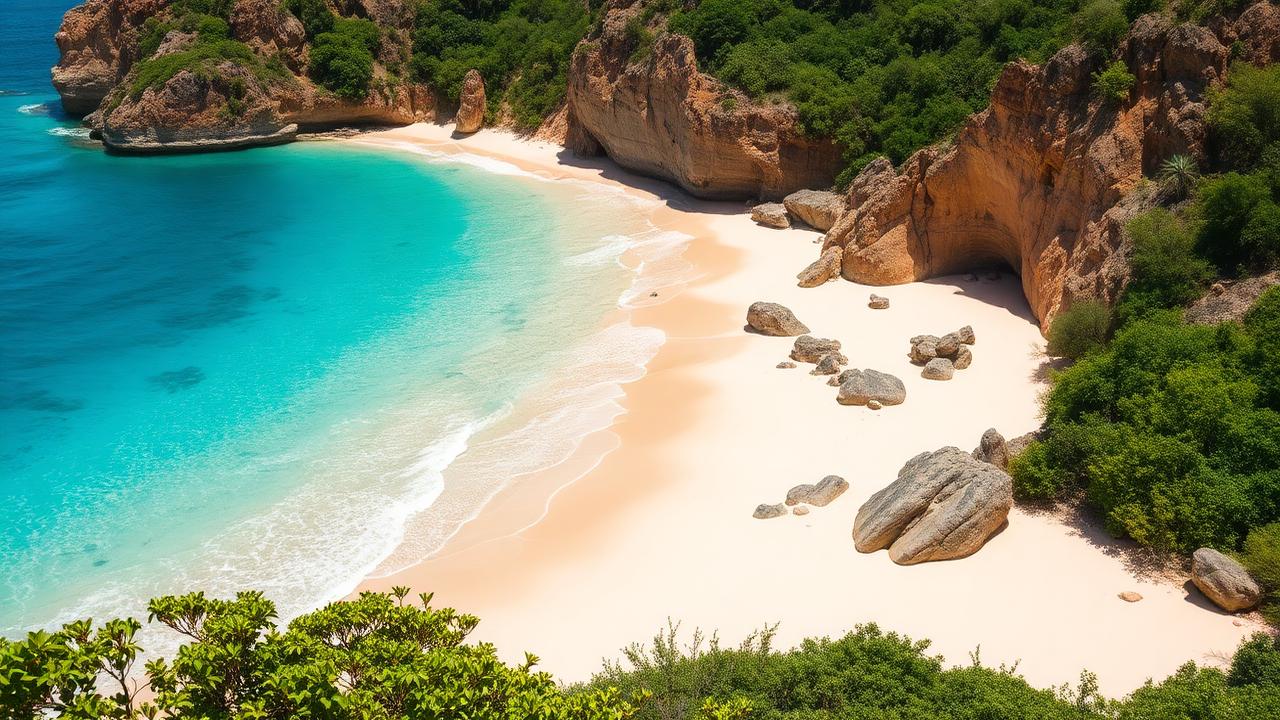
For travelers seeking genuine solitude, the outer islands — particularly **Desroches** and **Alphonse** — deliver empty beaches measured in kilometers rather than meters. These coral atolls require charter flights from Mahé but reward the effort with flats fishing for bonefish and giant trevally, and dive sites where the reef wall drops into deep blue with startling abruptness.
**Best for:** Honeymoons, luxury escapes, underwater photography, geological wonder.
Zanzibar & the Swahili Coast
Tanzania's Zanzibar archipelago occupies a unique position in African beach culture. The island's eastern shoreline — particularly the stretch from **Paje** to **Jambiani** — catches the full force of Indian Ocean tides, creating a landscape that transforms dramatically every six hours. At low tide, the reef flat extends hundreds of meters, exposing tide pools and seaweed farms tended by local communities. At high tide, the same stretch becomes a deep turquoise swimming pool.
Nungwi, at Zanzibar's northern tip, avoids the extreme tidal variation that defines the east coast. The beach here drops off more steeply, making it the island's most reliable swimming destination regardless of the tide chart. Traditional dhow builders still work on the beach, and sunset from Nungwi — with the silhouettes of fishing boats against an orange-to-purple gradient — remains one of East Africa's great daily spectacles.
Stone Town itself, while not a beach destination per se, serves as the cultural anchor for any Zanzibar visit. The UNESCO-listed old town is a labyrinth of coral stone buildings, carved wooden doors, and rooftop restaurants where the call to prayer mixes with the scent of cloves and cardamom.
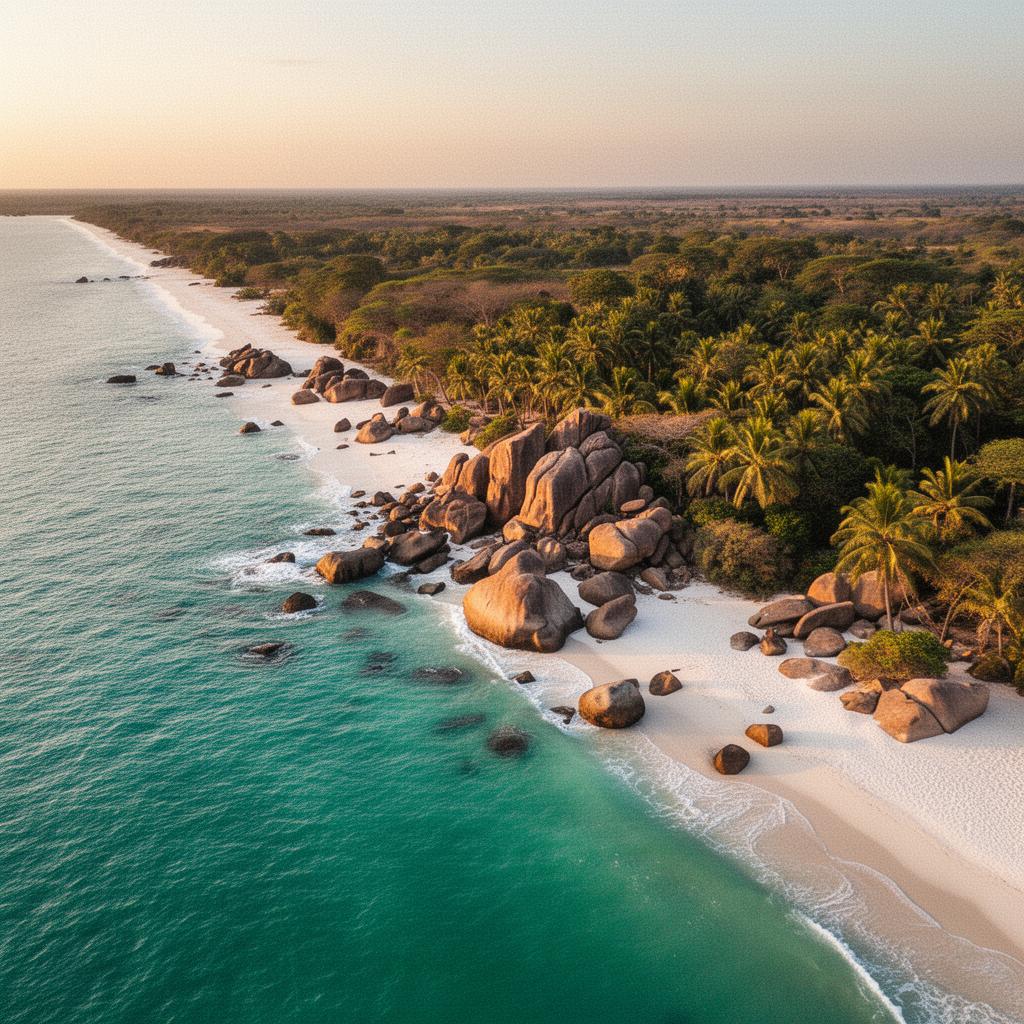
On the mainland, Kenya's **Diani Beach** stretches for 17 uninterrupted kilometers of white sand backed by casuarina trees. The reef system running parallel to shore creates a protected lagoon ideal for kayaking and kite surfing, while the forest behind the beach shelters colobus monkeys and over 270 bird species. Diani functions as a genuine beach-and-bush destination: Shimba Hills National Reserve, home to sable antelope and elephant, sits just 30 minutes inland.
**Best for:** Cultural immersion, kite surfing, dhow sailing, reef snorkeling, and combining beach with safari.
Cape Town & South Africa's Atlantic Seaboard
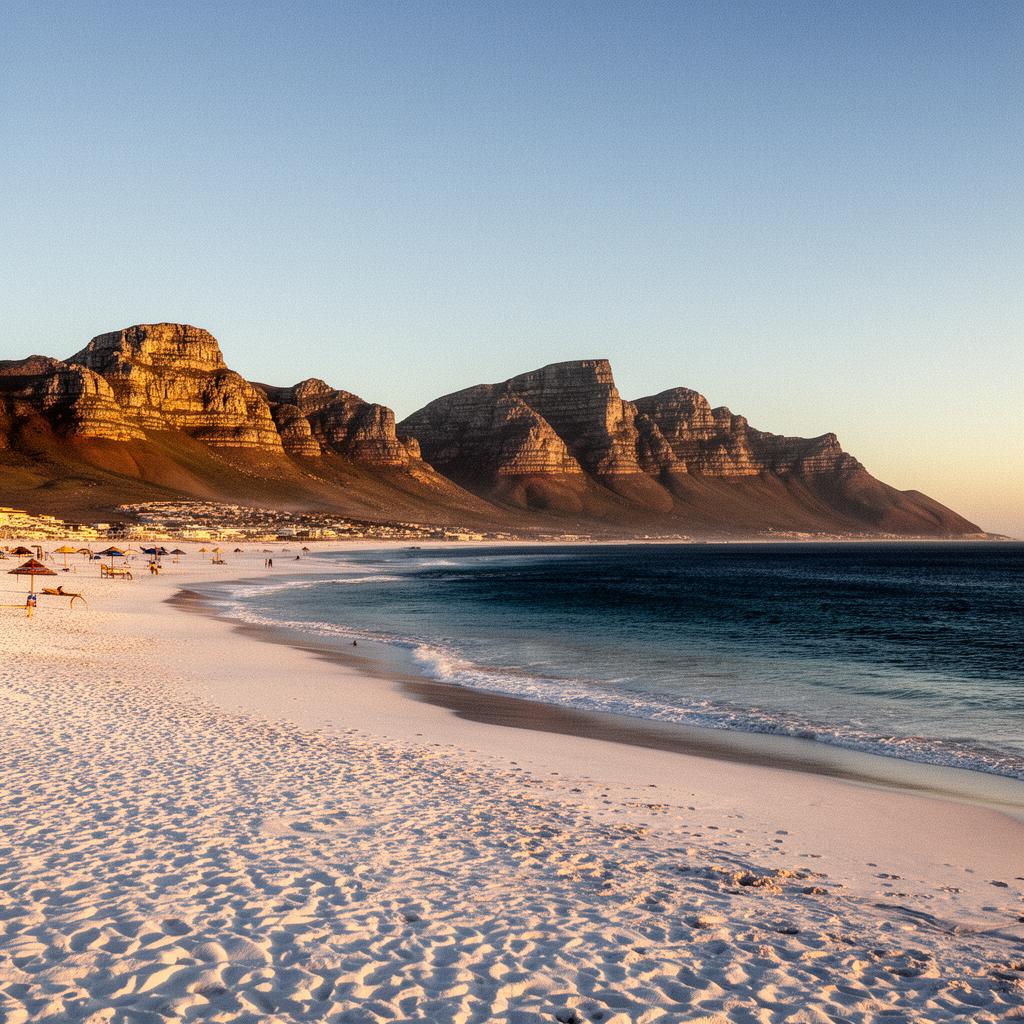
South Africa's Cape Peninsula produces beaches that look tropical but behave like the North Atlantic. The Atlantic Seaboard — **Camps Bay**, **Clifton**, **Llandudno** — offers white sand framed by the dramatic Twelve Apostles mountain range, but the Benguela Current keeps water temperatures between 10°C and 16°C year-round. These are beaches for sunbathing, sundowners, and spectacle rather than extended swimming.
**Clifton Fourth Beach**, sheltered from the Cape's notorious southeaster wind by granite boulders, manages to feel Mediterranean despite water temperatures that would empty a pool in Barcelona. The beach's microclimate creates genuinely warm conditions on windless days, and the setting — white sand, turquoise-tinted water, Lion's Head looming overhead — ranks among the most dramatic urban beach landscapes anywhere.
For warmer water, False Bay's eastern shore delivers. **Muizenberg** — identified by its iconic row of colorful Victorian bathing boxes — catches morning sun and benefits from warmer water pushed in from the Indian Ocean side. Muizenberg also claims legitimate surf credentials: the long, gentle waves breaking over a sandy bottom make it South Africa's most forgiving surf beach and a genuine learning spot.
Further east, the Garden Route between Mossel Bay and Storms River packages beaches with indigenous forest, river gorges, and wildlife encounters. **Plettenberg Bay's** Robberg Peninsula offers a circular hiking trail that passes three distinct beaches, with Cape fur seal colonies and occasional whale sightings from the cliff path.
**Best for:** Dramatic scenery, surf culture, wine-country proximity, urban beach sophistication.
Mozambique: The Undiscovered Frontier
Mozambique's 2,500-kilometer coastline remains mainland Africa's greatest beach secret. The country's infrastructure challenges have paradoxically preserved coral reef systems and marine habitats that have been degraded elsewhere.
The **Bazaruto Archipelago**, accessible by boat or light aircraft from Vilanculos, encompasses five islands surrounded by the southernmost coral reefs in the Indian Ocean. The diving here is world-class: the Two Mile Reef system supports over 2,000 fish species, and the archipelago is one of the last remaining habitats for the dugong.
Tofo Beach, in Inhambane Province, has built a reputation as one of the world's most reliable destinations for encountering whale sharks and manta rays. The beach itself is a long, gently curved stretch of sand backed by coconut palms, with a small community of dive operators and beach restaurants that gives Tofo an intimate, end-of-the-road atmosphere.
**Best for:** Diving, marine megafauna encounters, barefoot luxury, escapism.
Cape Verde: Atlantic Character
Cape Verde occupies a peculiar geographic and cultural position — a volcanic archipelago 570 kilometers off the West African coast, with Portuguese colonial architecture, Creole culture, and beaches that range from Saharan-gold sand to black volcanic rock.
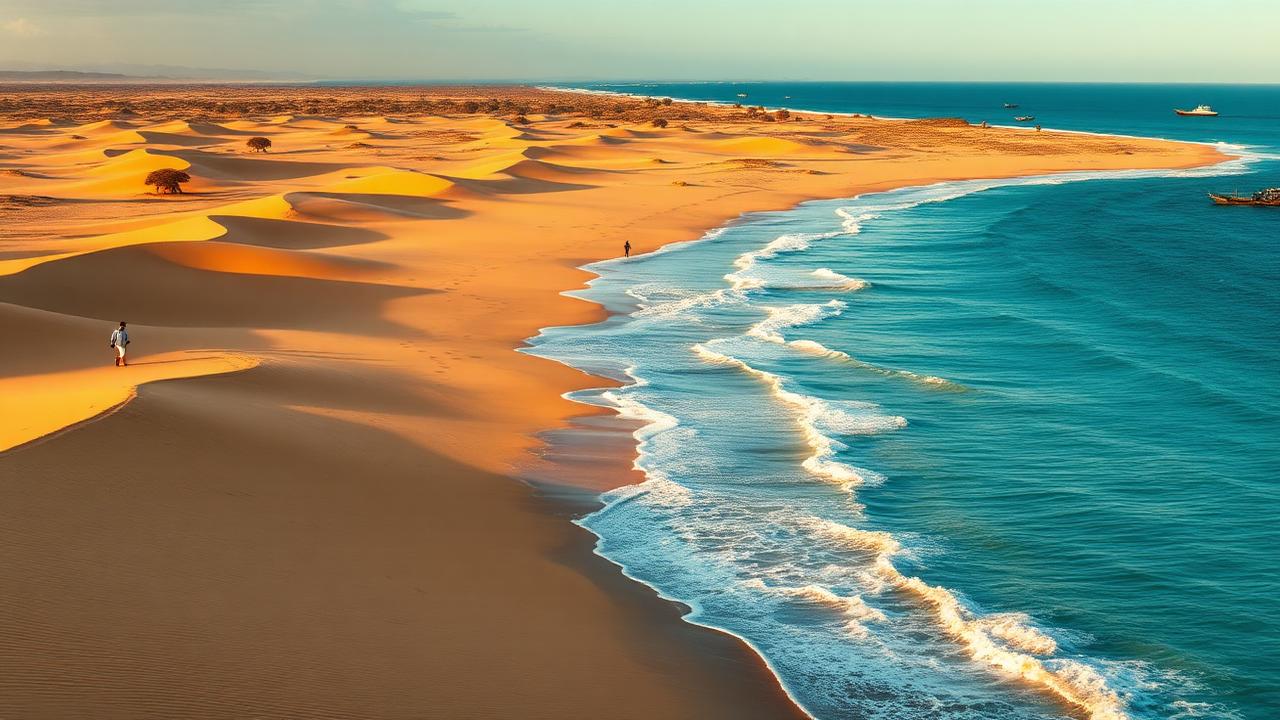
Santa Maria on Sal draws the majority of beach-focused visitors with its four-kilometer stretch of golden sand, shallow turquoise water, and year-round sunshine. Sal's consistently strong trade winds make it one of West Africa's premier windsurfing and kitesurfing destinations.
**Boa Vista** offers a more expansive, wilder alternative. **Praia de Santa Mónica** stretches for 18 kilometers without a single permanent structure. Between July and October, loggerhead turtles nest on these beaches in significant numbers.
**Best for:** Wind sports, turtle watching, Creole cultural immersion, volcanic landscapes.
When to Visit
Africa's beaches span both hemispheres and multiple climate zones, so timing depends entirely on your chosen destination. The Seychelles enjoys equatorial consistency year-round. Zanzibar peaks from June to October. Cape Town's beach season runs from November to March. Mozambique is best visited May through November. Cape Verde delivers year-round warmth.
Planning Your African Beach Trip
For a first African beach trip, combining Cape Town with either the Seychelles or Zanzibar creates a satisfying contrast between urban coastal sophistication and island immersion. The continent's beach offerings will only grow more accessible in coming years. The time to discover Africa's beaches is now — before the rest of the world catches on.
Book Your Beach Getaway
Find the best deals on flights, hotels, and car rentals for your perfect beach vacation.