Best Beaches in the U.S. Where You Can Drive Your Car
Discover America's top drive-on beaches from Daytona Beach to the Outer Banks. Complete guide with vehicle requirements, permits, safety tips, and insider advice for beach driving adventures.
By BeachLoco Editorial Team
The concept sounds almost too good to be true: pull your car onto the sand, park steps from the waterline, unload your cooler and chairs without a quarter-mile trudge, and spend the day with your vehicle as a mobile base camp on the beach. Yet across the United States, a surprising number of beaches still allow vehicle access — a tradition that predates modern beach development and creates a uniquely American coastal experience that's part beach day, part road trip, and entirely unforgettable.
Why Drive-On Beaches Still Exist
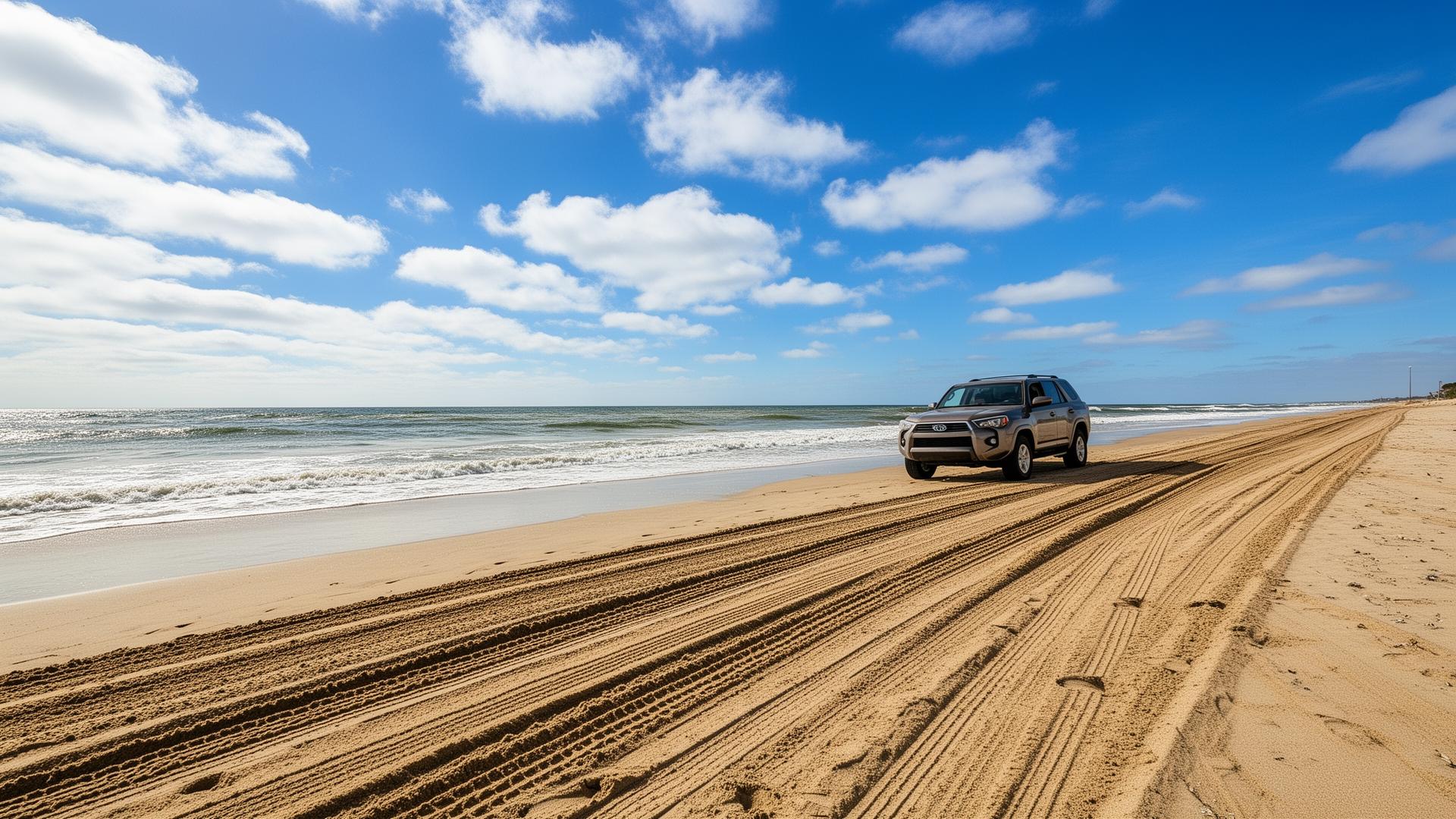
Drive-on beach access survives in places where the coastline is extensive enough, the sand firm enough, and the local culture connected enough to vehicle-beach traditions that banning cars would feel like erasing history. Many of these beaches have served as roads and gathering places since long before paved highways existed — in some cases, the beach literally was the highway. Today, vehicle access continues because it serves practical purposes: it allows anglers to reach remote fishing spots, enables families to access uncrowded stretches, and supports the surf-fishing culture that depends on mobile access to productive water.
The environmental debate around drive-on beaches is ongoing, and regulations have tightened significantly at many locations. Modern access rules typically include designated driving corridors, seasonal closures for wildlife nesting, speed limits, and permit requirements that fund beach maintenance and conservation programs. The beaches on this list maintain vehicle access within these responsible frameworks.
The Best Drive-On Beaches in the USA
Daytona Beach, Florida is the most famous drive-on beach in America, and its 23 miles of hard-packed sand have supported vehicle traffic since the early 1900s — when the beach served as a racetrack that eventually led to the founding of NASCAR. Today, designated driving zones allow vehicles on approximately 18 miles of beach, with speed limits of 10 mph and toll-booth-style access points. The beach is wide, the sand is remarkably firm (courtesy of coquina shell content), and the experience of parking your car facing the Atlantic, popping the tailgate, and settling in for the day remains a uniquely Daytona tradition.
Outer Banks, North Carolina offers some of the most dramatic drive-on beach experiences in the country. Cape Hatteras National Seashore permits 4WD vehicle access on designated sections of beach, providing access to remote stretches where the surf fishing is legendary and the crowds are virtually nonexistent. A proper 4WD vehicle with aired-down tires is essential — the sand here is soft, and getting stuck without recovery equipment is a real possibility. The reward is access to pristine, windswept beaches that feel like the edge of the world.
Padre Island National Seashore, Texas allows vehicle access on over 60 miles of undeveloped Gulf Coast beach — the longest stretch of undeveloped barrier island in the world. The northern section near the visitor center is accessible to standard vehicles on packed sand, but venturing south requires a 4WD and serious preparation. The remote southern reaches of Padre Island offer a true wilderness beach experience: no facilities, no crowds, and the possibility of encountering Kemp's ridley sea turtles during nesting season.
Oceano Dunes, California provides the most unique drive-on beach experience on the West Coast. This stretch of the Pismo Beach area allows vehicles directly on the sand, and the adjacent dune system supports off-highway vehicle recreation. The combination of Pacific Ocean beach driving and coastal dune exploration creates an experience unlike anything else on the California coast. Sunset drives along the waterline with the Pacific stretching to the horizon are particularly memorable.
Long Beach, Washington claims the title of "World's Longest Beach" and allows vehicle access on a 17-mile stretch of Pacific coastline. The beach is wide, flat, and firm enough for standard vehicles, making it one of the most accessible drive-on beaches in the country. The Pacific Northwest setting — dramatic clouds, cool temperatures, and the moody beauty of the Washington coast — provides an entirely different aesthetic from the sunbaked Southern drive-on beaches.
St. Augustine Beach, Florida maintains limited vehicle access in designated areas, continuing a tradition that dates back centuries on this stretch of northeast Florida coast. The beach access fee supports maintenance, and the firm, shell-mixed sand supports standard vehicles comfortably. Proximity to America's oldest city adds a historical dimension to the beach experience.
What Makes Drive-On Beaches Special
The practical advantages are obvious: no hauling gear across parking lots and dunes, the ability to carry more equipment (coolers, grills, fishing gear, tents), and the convenience of having your vehicle as a wind shelter, music source, and charging station. For families with young children, the elderly, or anyone with mobility challenges, drive-on access can be the difference between a beach day being possible or not.
But the appeal goes deeper than convenience. There's a freedom to drive-on beaches that resonates with something fundamentally American — the open-road sensibility applied to the coastline. Driving on the beach connects you to an older relationship between humans and the coast, one that predates boardwalks and beach badges and parking meters. It's the beach as frontier rather than facility.
Best Time to Visit
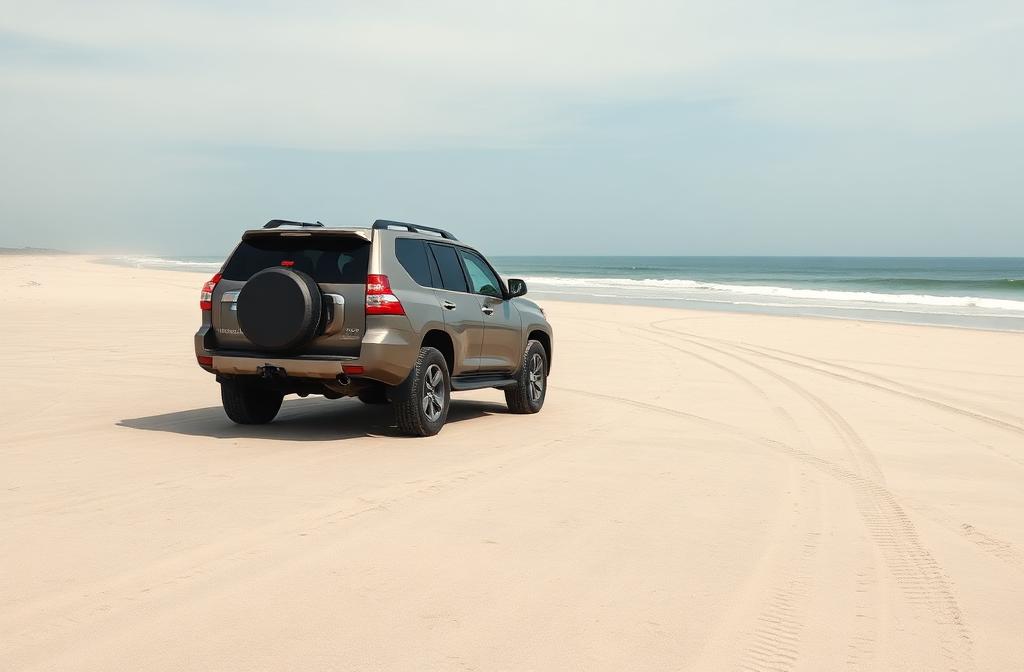
Timing varies by location. Florida drive-on beaches are accessible year-round, with the most pleasant conditions from October through May. The Outer Banks' vehicle access is best from fall through spring, when summer crowds (and seasonal restrictions for bird nesting) subside. Padre Island offers year-round access, though summer heat can be intense. Pacific Coast drive-on beaches are most enjoyable from June through September when weather is driest. Always check beach safety conditions and tide schedules before driving onto any beach.
Essential Preparation
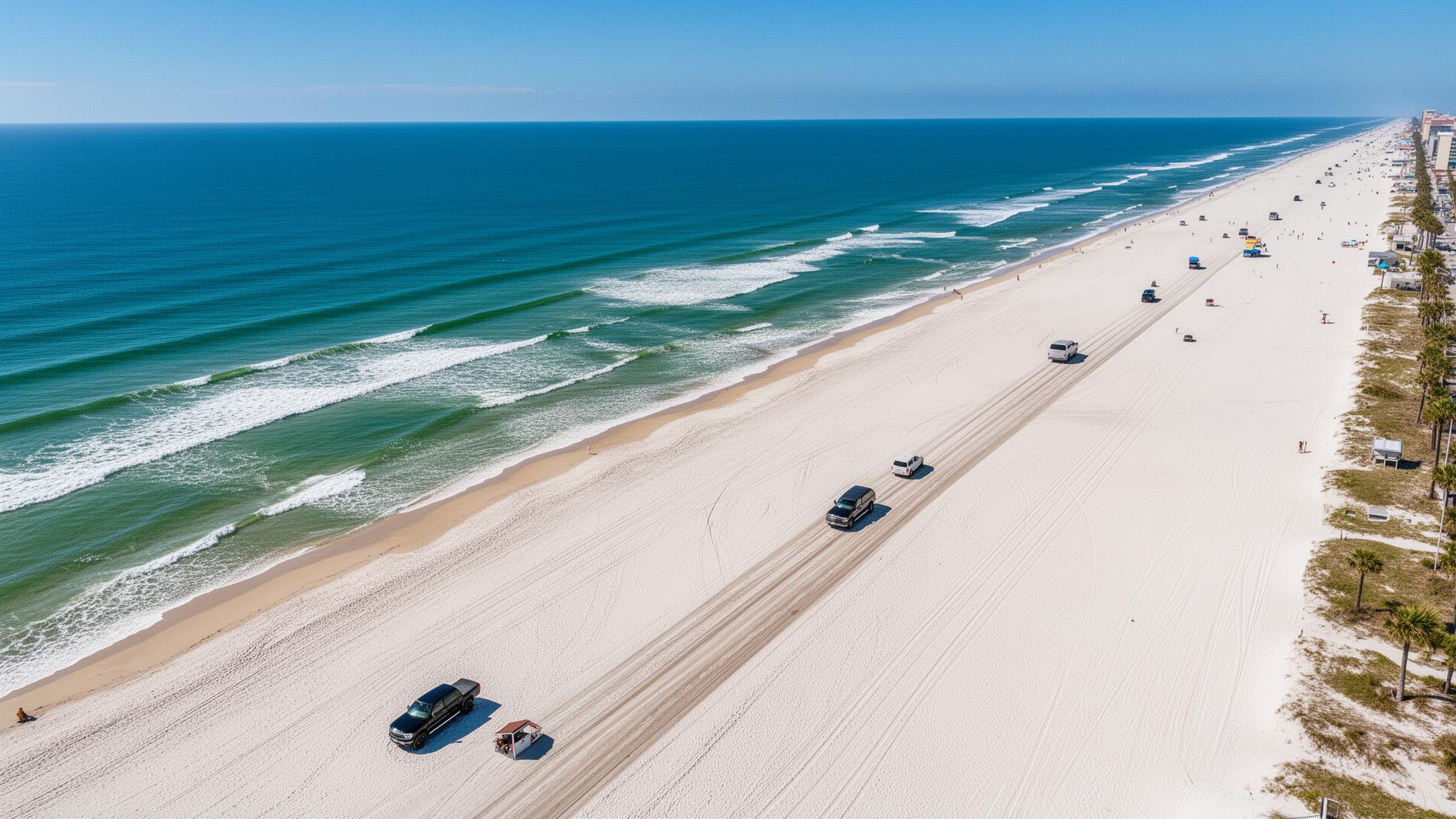
Know your vehicle's capabilities before attempting beach driving. Standard 2WD vehicles work on firmly packed beaches (Daytona, Long Beach, St. Augustine), but soft-sand beaches (Outer Banks, southern Padre Island) require 4WD with reduced tire pressure. Carry a tow strap, shovel, and boards in case of getting stuck. Check tide schedules — many drive-on beaches become unsafe or impassable at high tide, and being caught by a rising tide with your vehicle is a costly and potentially dangerous mistake.
Research permit requirements in advance. Most drive-on beaches require permits, which may be available at beach access points or require advance online purchase. Fees typically range from $10 to $50 per day, with seasonal passes offering better value for frequent visitors. Some beaches have daily vehicle capacity limits, meaning early arrival is essential during popular periods.
Where to Stay
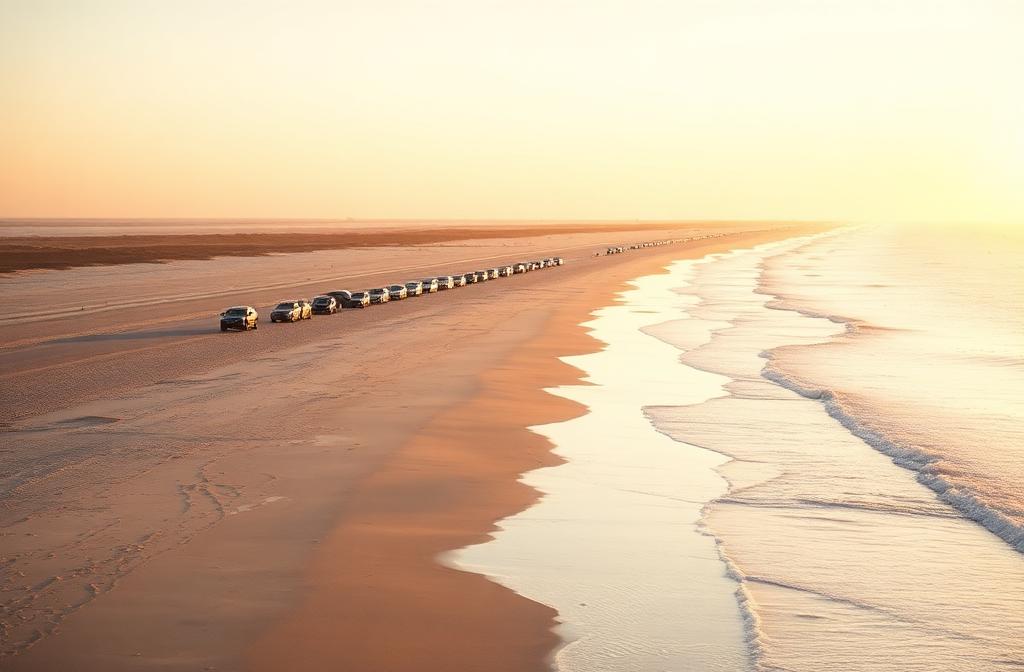
For the most authentic drive-on beach experience, choose accommodations close to the beach access points. Daytona's oceanfront hotels put you within walking distance of driving zones. The Outer Banks' rental houses offer the most space and beach proximity. Padre Island's primitive camping — parking your vehicle on the beach and camping beside it — represents the ultimate drive-on beach experience for adventurous travelers.
Local Tips
Never park below the high-tide line — check for the seaweed debris line that marks previous high water and park well above it. Rinse your vehicle's undercarriage with fresh water after beach driving to prevent salt corrosion. Bring a complete beach packing kit plus vehicle-specific additions: a portable air compressor (for re-inflating tires after beach driving), jumper cables, and extra water. At the Outer Banks, local outfitters rent the equipment you need if your vehicle isn't beach-ready.
Drive-on beaches represent a distinctly American coastal tradition — one that connects the freedom of the open road with the timeless beauty of the shore. These beaches remind us that some of the best experiences come from the simplest formula: your car, the sand, the water, and nowhere you need to be.
Book Your Beach Getaway
Find the best deals on flights, hotels, and car rentals for your perfect beach vacation.