Best Inshore Fishing Spots on the Gulf Coast (Florida to Texas)
From Florida's emerald flats to Texas' hypersaline lagoons, discover the Gulf's top inshore spots for redfish, trout, flounder, and more.
By BeachLoco Editorial Team
Best Inshore Fishing Spots on the Gulf Coast
The Gulf stretches across five states and more than 1,600 miles of shoreline — a network of bays, grass flats, marshes, islands, and estuaries unmatched anywhere else in the United States. This is where warm, nutrient-rich water mixes with shallow, protected habitats to create one of the most productive inshore fisheries in North America.
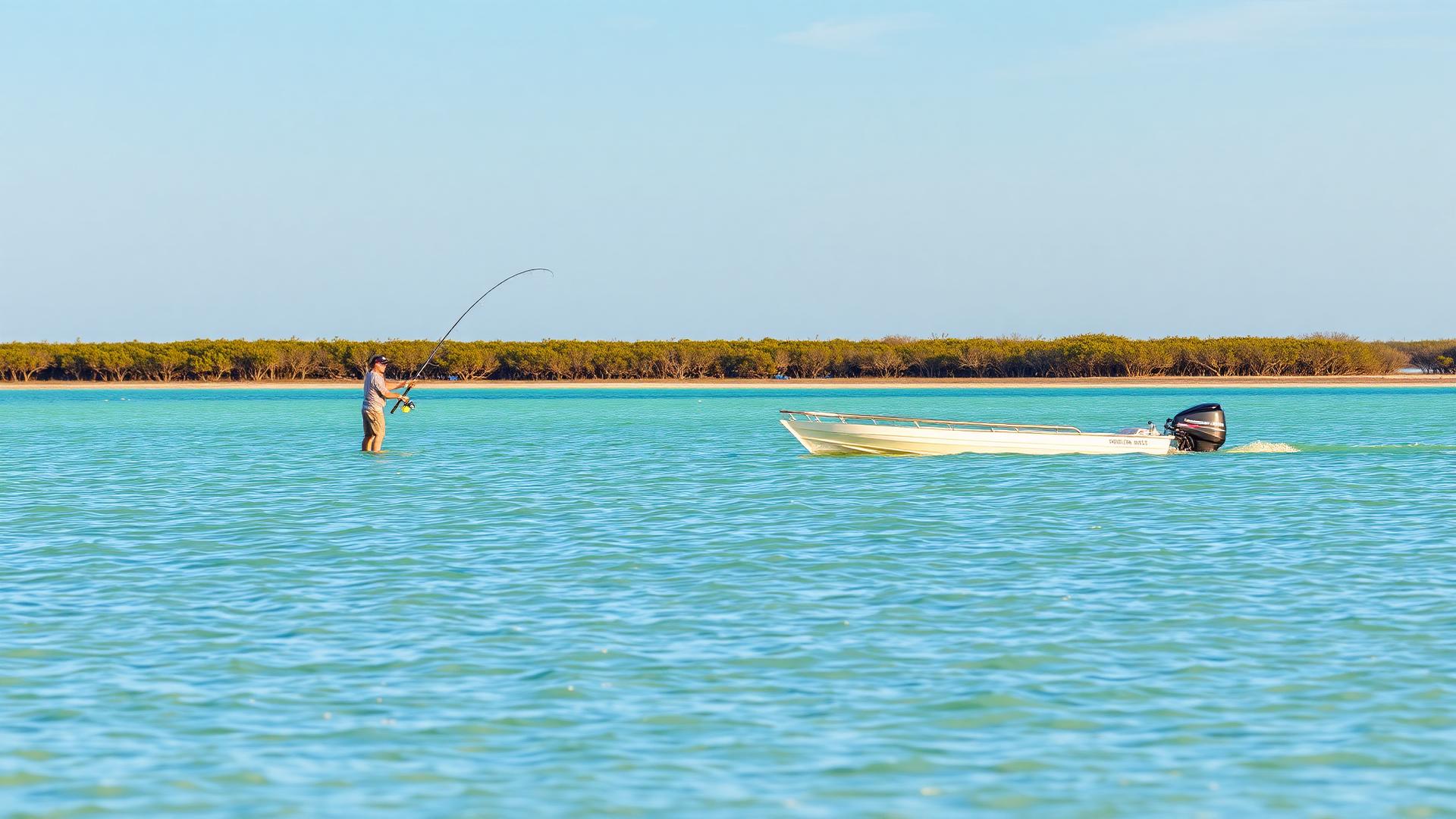
While many guides list the same high-profile locations, this article takes you deeper — highlighting both famous destinations and lesser-known spots that consistently produce redfish, speckled trout, flounder, and sheepshead.
You'll also learn specific habitat structures, local tides and bait migrations, and seasonal windows that most blogs skip but serious anglers rely on.
Why the Gulf Coast Is a World-Class Inshore Fishery
Here's something most blogs don't tell you: The Gulf Coast accounts for nearly 45% of all U.S. saltwater recreational fishing trips.
That's because the region has:
- Massive estuarine systems (Louisiana alone has over 7,000 square miles of marsh)
- Miles of grass flats ideal for trout and redfish
- Consistent warm-water temperatures extending feeding seasons
- Abundant bait migration routes — mullet, shrimp, menhaden
- Low-wave environments protected by barrier islands
This combination creates year-round opportunities — even on windy days when ocean fishing is impossible.
Top Inshore Fishing Destinations on the Gulf Coast
Below is a state-by-state breakdown of the best inshore fishing areas — including insider details most websites overlook.
🐬 Florida Panhandle: Grass Flats, Clear Water, and Massive Speckled Trout
Destin, Fort Walton & Choctawhatchee Bay
This system contains some of the clearest inshore water on the entire Gulf — a rarity caused by lower river runoff compared to Louisiana and Texas. Destin has earned its nickname as the "World's Luckiest Fishing Village" for good reason.
Target Species: Speckled Trout, Redfish, Pompano (seasonal), Flounder
Unique Facts Most Blogs Miss:
- Choctawhatchee Bay has a naturally occurring deep trench (averaging 20–40 ft) that holds trout during temperature swings — this makes it a top winter fishery.
- The bay is fed by two spring-fed rivers, meaning water clarity can recover faster after storms compared to other Gulf systems.
🎣 Book a Fishing Charter in Destin
Find experienced local guides for inshore fishing adventures in Florida's Emerald Coast.
Browse Destin Fishing Charters →Pensacola Bay & Santa Rosa Sound
Long, narrow, and protected — perfect on windy days. Pensacola offers some of the most accessible inshore fishing on the Panhandle.
Why It's Great:
- Reliable redfish schools along grass edges
- Strong fall mullet run, which triggers aggressive feeding
Insider Tip: Most anglers only fish the grass flats, but the drop-offs along the ICW (Intracoastal Waterway) consistently hold oversized trout in summer.
🐚 Alabama: Compact but Mighty (Gulf Shores & Orange Beach)
Little Lagoon
One of the Gulf's most underrated inshore fisheries. Gulf Shores packs serious fishing into a compact coastal area.
Target Species: Flounder, Redfish, Trout
Unique Facts:
- It's a closed lagoon with a single pass — meaning water exchanges create predictable tidal funnels where fish stage to ambush bait.
- Fall flounder migrations concentrate in this narrow area, making it one of the easiest places on the Gulf to target flatfish.
Mobile Bay
Shallow, turbid, and bait-rich — especially near the delta.
Insider Tip: Most visitors overlook the upper bay, but the creeks and marsh drains near the Mobile-Tensaw Delta produce huge summer redfish after rain events. Rain pushes freshwater shrimp and minnows into the marsh → predators follow.
🎣 Book a Fishing Charter in Gulf Shores
Experience Alabama's hidden inshore fishery with expert local captains.
Browse Gulf Shores Fishing Charters →🐊 Mississippi: Barrier Islands = Inshore Paradise
Mississippi's mainland looks limited — but the barrier islands transform everything.
Ship Island, Horn Island & Cat Island
These islands create:
- Protected grass flats
- Tidal marshes
- Deep cuts between islands
- White-sand shallows that warm early in spring
Unique Facts Most Blogs Don't Mention:
- Mississippi's barrier islands create the highest concentration of speckled trout per acre in the Central Gulf, according to state biologists.
- The water clarity here can resemble Florida after several calm days — shocking but true.
Best Seasons:
- Spring: Rising temps attract trout to shallow grass.
- Fall: Massive redfish schools along sandbars.
- Summer: Deep cuts hold trout and ladyfish feeding frenzies.
🦐 Louisiana: The Redfish Capital of the World
No place on Earth has more redfish habitat.
Venice, LA (Mississippi River Delta)
A labyrinth of creeks, ponds, marsh, and mud flats.
Why It's Legendary:
- Nutrient-rich sediment creates huge food chains
- Water movement is controlled more by river flow than tide, something most articles never mention
- Oversized redfish ("bulls") live here year-round
Insider Knowledge:
- You can sight-fish for redfish in 1–2 feet of water even in winter, thanks to dark mud bottoms that heat quickly.
- The delta produces speckled trout that move up to 30 miles in a single cold front, repositioning into deeper oilfield cuts.
Few blogs mention trout migration distances — but it's a key Gulf inshore behavior.
Grand Isle & Barataria Bay
Classic Louisiana inshore fishing.
Best Features:
- Extensive oyster reefs
- Grass flats around Caminada Pass
- Consistent shrimp migrations in late summer
Tip Only Locals Know: The north side of Barataria Bay warms 2–3 degrees faster in early spring than the south side, triggering earlier trout activity.
🐟 Texas: Big Bays, Big Shorelines, and Big Redfish
Galveston Bay
Texas' largest estuary and one of the most productive on the Gulf. Galveston offers world-class inshore opportunities.
Why It's Great:
- Huge oyster reef system
- Deep channels + shallow flats
- Strong tidal exchanges
Overlooked Fact: Galveston Bay is fed by multiple rivers, creating a salinity gradient that moves fish around predictably:
- Low salinity → redfish push shallow
- High salinity → speckled trout move toward the open bay
This pattern is incredibly valuable for planning trips.
🎣 Book a Fishing Charter in Galveston
Explore Texas' largest estuary with expert guides who know the oyster reefs and tidal patterns.
Browse Galveston Fishing Charters →Matagorda Bay
Beloved by serious anglers.
Highlights:
- Clearer water than Galveston
- Massive shrimp migrations in fall
- Legendary wade-fishing spots
Insider Tip: The Colorado River discharge often determines trout location — fish upcurrent when water temps drop suddenly.
Corpus Christi & Laguna Madre
One of the world's few hypersaline lagoons — meaning salt levels are higher than the ocean.
Why It Matters:
- Trout grow larger in hypersaline water due to metabolic adaptation
- Vast seagrass beds support endless bait
- Redfish tailing is common even in midday
Unique Feature: Laguna Madre contains one of the largest continuous seagrass meadows in North America, making it a nursery for every inshore species.
🎣 Book a Fishing Charter in Corpus Christi
Fish the legendary Laguna Madre with local experts who know the seagrass flats.
Browse Corpus Christi Fishing Charters →When to Fish the Gulf Inshore (Season Breakdown)
Spring
- Trout move to shallower grass
- Redfish spread across marshes
- Clear water = sight-fishing opportunities
Summer
- Early morning topwater trout action
- Redfish feed heavily on mullet schools
- Midday bite pushes fish to deeper edges
Fall (Peak Season)
- Bull redfish run
- Flounder migrations
- Shrimp pour out of marshes → explosive feeding
Winter
- Trout hold in deep channels
- Redfish concentrate on mud flats that warm fast
Final Thoughts — The Gulf's Inshore Waters Are a Treasure
From Florida's clear grass flats to Louisiana's limitless marsh and Texas' hypersaline lagoons, the Gulf Coast offers more inshore opportunity than any coastline in the United States.
Whether you're sight-fishing tailing redfish, drifting oyster reefs for trout, or hunting flounder along a channel edge, each region brings a different flavor — and understanding these overlooked features gives you an edge most anglers don't have.
📖 Related: Offshore Fishing in the Gulf
Ready for deeper waters? Explore our guide to rigs, reefs, and deep-sea hotspots for snapper, grouper, tuna, and more.
Read: Offshore Fishing in the Gulf — Rigs, Reefs & Deep-Sea Hotspots →