Florida Manatee Kayaking Guide: Crystal River, Blue Spring & Best Seasonal Encounters
Complete guide to kayaking with Florida's gentle giants. Discover the best manatee viewing spots at Crystal River, Blue Spring State Park, and Homosassa, plus essential seasonal timing for winter encounters.
By Florida Beach Guide Editorial Team
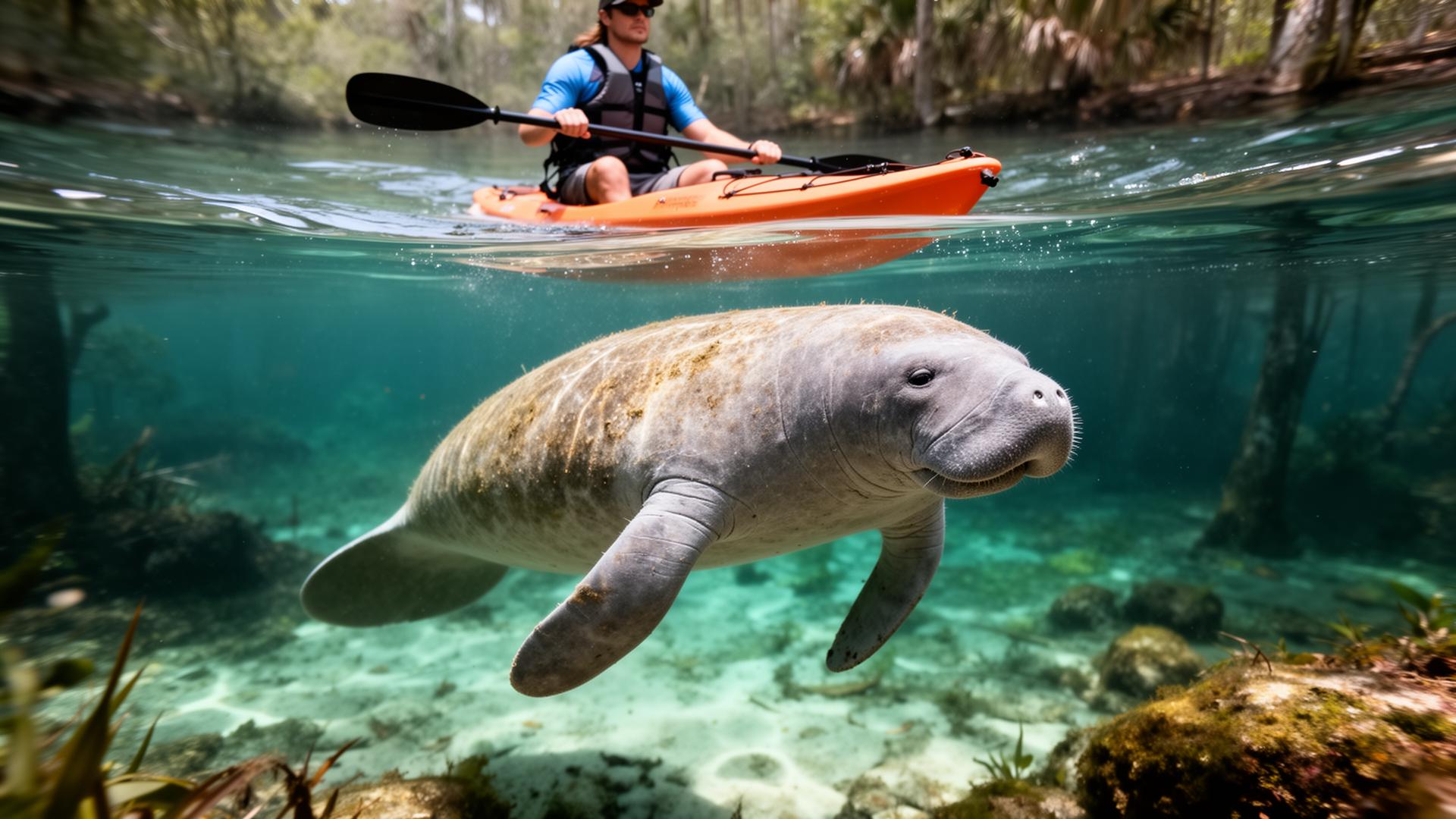
There's something profoundly moving about sharing the water with a Florida manatee. These gentle giants—weighing up to 1,200 pounds yet moving with surprising grace—have captured the hearts of wildlife enthusiasts for generations. Florida's crystal-clear springs offer some of the world's best opportunities to observe manatees in their natural habitat, and kayaking provides the perfect quiet, non-intrusive way to experience these magical encounters.
Why Florida Is the Manatee Capital
Florida is home to the largest population of West Indian manatees in the United States, with an estimated 8,000+ individuals. These marine mammals are particularly sensitive to cold water—temperatures below 68°F can be life-threatening. This makes Florida's natural springs, which maintain a constant 72°F year-round, essential winter refuges.
When Gulf and Atlantic waters cool in winter, manatees congregate in massive numbers at spring-fed rivers and power plant warm water outflows. This predictable migration creates some of the most reliable wildlife viewing opportunities anywhere in North America.
Best Manatee Kayaking Destinations
Crystal River & Three Sisters Springs
Crystal River in Citrus County is the undisputed manatee capital of the world. The town's spring-fed waters—particularly the famous Three Sisters Springs—attract hundreds of manatees each winter. This is also the only place in Florida where you can legally swim with manatees (with proper permits and guidelines).
Three Sisters Springs is accessible by kayak or paddleboard, though swimming access is controlled. The crystal-clear water offers visibility of 50+ feet, allowing you to watch manatees grazing, resting, and socializing from your kayak.
Blue Spring State Park
Located on the St. Johns River near Orange City, Blue Spring State Park is one of Florida's premier manatee viewing destinations. The main spring boil maintains a constant 72°F, drawing manatees from the colder river during winter months.
While swimming and paddling are prohibited in the spring run during manatee season (November 15 - March 15), the park offers excellent viewing from boardwalks and platforms. Kayakers can paddle the St. Johns River and observe manatees in the river proper.
Homosassa Springs Wildlife State Park
Just south of Crystal River, Homosassa Springs offers a unique combination of wild manatee viewing and a wildlife park featuring rescued manatees. The spring run attracts wild manatees, while the park provides educational programs and up-close encounters with permanent residents.
Weeki Wachee Springs
Famous for its mermaid shows, Weeki Wachee also attracts manatees during winter. The spring-fed Weeki Wachee River offers excellent kayaking with manatee sighting opportunities, plus the bonus of the quirky mermaid theater for a unique Florida experience.
Manatee Springs State Park
Located on the Suwannee River, Manatee Springs provides a more wilderness-oriented experience. The first-magnitude spring attracts manatees from the Suwannee, and kayakers can explore both the spring run and the scenic river.
Seasonal Timing: When to See Manatees
Timing is crucial for manatee encounters. Their presence at springs is directly tied to water temperature:
Peak Season: November - March
This is prime manatee season. As Gulf and river temperatures drop below 68°F, manatees seek warm spring water. The colder the weather, the more manatees congregate at springs. January and February typically offer the highest concentrations.
Monthly Breakdown
- November: Early arrivals begin appearing after first cold fronts
- December: Numbers build significantly as winter settles in
- January: Peak concentrations—hundreds at major springs
- February: Excellent viewing continues; mating season begins
- March: Numbers decline as water warms; calving season
- April - October: Most manatees disperse to coastal waters, rivers, and estuaries
Best Time of Day
Early morning (sunrise to 9 AM) offers the best manatee viewing. Animals are more active, boat traffic is minimal, and the light filtering through spring water creates magical photography conditions. Manatees also tend to rest at springs during the coldest overnight hours and become active as the sun warms.
Kayaking vs. Swimming with Manatees
Kayak Encounters
Kayaking offers a non-intrusive way to observe manatees in their natural environment. From a kayak, you can:
- Cover more water and find manatees in various locations
- Observe natural behaviors without entering the water
- Enjoy encounters at locations where swimming is prohibited
- Stay warm and dry during cold winter mornings
- Carry camera equipment safely
Swimming Encounters
Crystal River is the only place in Florida where swimming with wild manatees is legal. This requires:
- Booking with a licensed tour operator
- Following strict passive interaction guidelines
- Wearing a wetsuit (water is 72°F, air can be 40°F)
- Understanding that manatees must approach you—not vice versa
Manatee Viewing Ethics & Regulations
Manatees are protected under both federal and state law. Violating these protections can result in significant fines:
Essential Rules
- No chasing: Never pursue or follow a manatee
- No touching: Let manatees approach you; never reach out
- No feeding: Feeding wildlife is illegal and harmful
- No separating: Never come between a mother and calf
- No cornering: Always leave manatees an escape route
- Paddle quietly: Avoid splashing and sudden movements
Sanctuary Zones
Many manatee areas have designated sanctuary zones where watercraft are prohibited during manatee season. These zones are clearly marked with buoys and signs. Entering these areas, even by kayak, can result in citations.
Choosing a Manatee Kayak Tour
For first-time visitors, a guided tour offers significant advantages:
What to Look For
- Small group sizes: 6-8 people maximum for quality encounters
- Experienced guides: Local knowledge of manatee behavior and locations
- Quality equipment: Stable, comfortable kayaks suited for wildlife viewing
- Emphasis on ethics: Operators who prioritize animal welfare over guaranteed encounters
- Flexibility: Willingness to adjust itinerary based on where manatees are located
Average Costs
- Guided kayak tours: $50-85 per person (2-3 hours)
- Swim-with-manatees tours: $65-100 per person (Crystal River)
- Kayak rentals: $25-45 for half-day self-guided
- State park entry: $6-8 per vehicle
Self-Guided Manatee Kayaking
Experienced paddlers can rent kayaks and explore independently. Key considerations:
Crystal River Area
Several outfitters rent kayaks near Kings Bay and the Crystal River. Launch early (before 7 AM) to beat crowds and motorboat traffic. Study sanctuary zone maps before launching—violations are taken seriously.
State Parks
Blue Spring, Manatee Springs, and other state parks offer kayak rentals or allow private kayak launches. Check specific park regulations regarding seasonal restrictions.
Essential Gear
- Polarized sunglasses (essential for spotting manatees below surface)
- Waterproof camera or phone case
- Layers—mornings can be cold even in Florida
- Water and snacks
- Map showing sanctuary zones and paddle routes
Photography Tips
Manatees in clear spring water offer exceptional photography opportunities:
- Early morning light: Soft, golden light penetrates the water beautifully
- Polarizing filter: Essential for cutting surface glare and seeing into the water
- Underwater camera: GoPro or waterproof housing for surface/underwater shots
- Patience: The best shots come from waiting for manatees to approach
- Fast shutter speed: Manatees move slowly but kayak movement requires 1/500+
Planning Your Visit
Where to Stay
- Crystal River: Multiple hotels, vacation rentals, and the historic Plantation on Crystal River
- Homosassa: Quieter alternative with riverside lodges
- Orange City/DeLand: Near Blue Spring State Park
Combining with Other Activities
Make a weekend of your manatee adventure:
- Kayak the Rainbow River (crystal-clear springs, no manatees but stunning)
- Visit Ellie Schiller Homosassa Springs Wildlife State Park
- Explore the Space Coast for summer bioluminescence
- Paddle the Suwannee River for wilderness adventure
Conservation & the Future
While manatee populations have recovered significantly since the 1970s, they still face serious threats:
- Boat strikes: Leading cause of human-related manatee deaths
- Habitat loss: Seagrass die-offs have caused recent starvation events
- Climate change: Warming waters may reduce reliance on springs (mixed impact)
- Water quality: Pollution affects both manatees and their seagrass food
Supporting responsible tourism, following all regulations, and contributing to conservation organizations like Save the Manatee Club helps ensure future generations can experience these remarkable animals.
Manatee Encounter Essentials
- ✓ Best Season: November through March (peak: January-February)
- ✓ Best Time: Sunrise to 9 AM for active manatees and fewer crowds
- ✓ Top Spot: Crystal River/Three Sisters Springs for highest concentrations
- ✓ Water Temp: Springs maintain constant 72°F year-round
- ✓ Must-Have: Polarized sunglasses for spotting manatees below surface
- ✓ Golden Rule: Let manatees approach you—never chase or touch
Paddling quietly through a Florida spring, watching a 1,000-pound manatee glide effortlessly beneath your kayak, is an experience that stays with you forever. These gentle giants—often called "sea cows" for their peaceful, grazing nature—remind us of the extraordinary wildlife encounters Florida offers to those who seek them out. Whether you choose a guided tour or independent adventure, a winter manatee kayaking trip belongs on every nature lover's bucket list.