Great Blue Hole Belize: Complete Diving Guide to the World's Most Famous Sinkhole
Everything you need to know about diving the Great Blue Hole in Belize. Discover this UNESCO World Heritage Site's ancient stalactites, reef sharks, and bucket-list bragging rights. Complete guide covering dive requirements, what to expect, tour options, and alternative Belize dive sites.
By Beach Travel Destinations
From 10,000 feet above, it appears as a perfect dark blue eye staring up from the Caribbean—a 1,000-foot wide circle of impossibly deep indigo surrounded by the turquoise ring of Lighthouse Reef. This is the Great Blue Hole, one of Earth's most spectacular natural wonders and diving's ultimate bucket-list destination. Jacques Cousteau called it one of the world's top dive sites in 1971, and five decades later, divers still make pilgrimages to experience its mysterious depths.
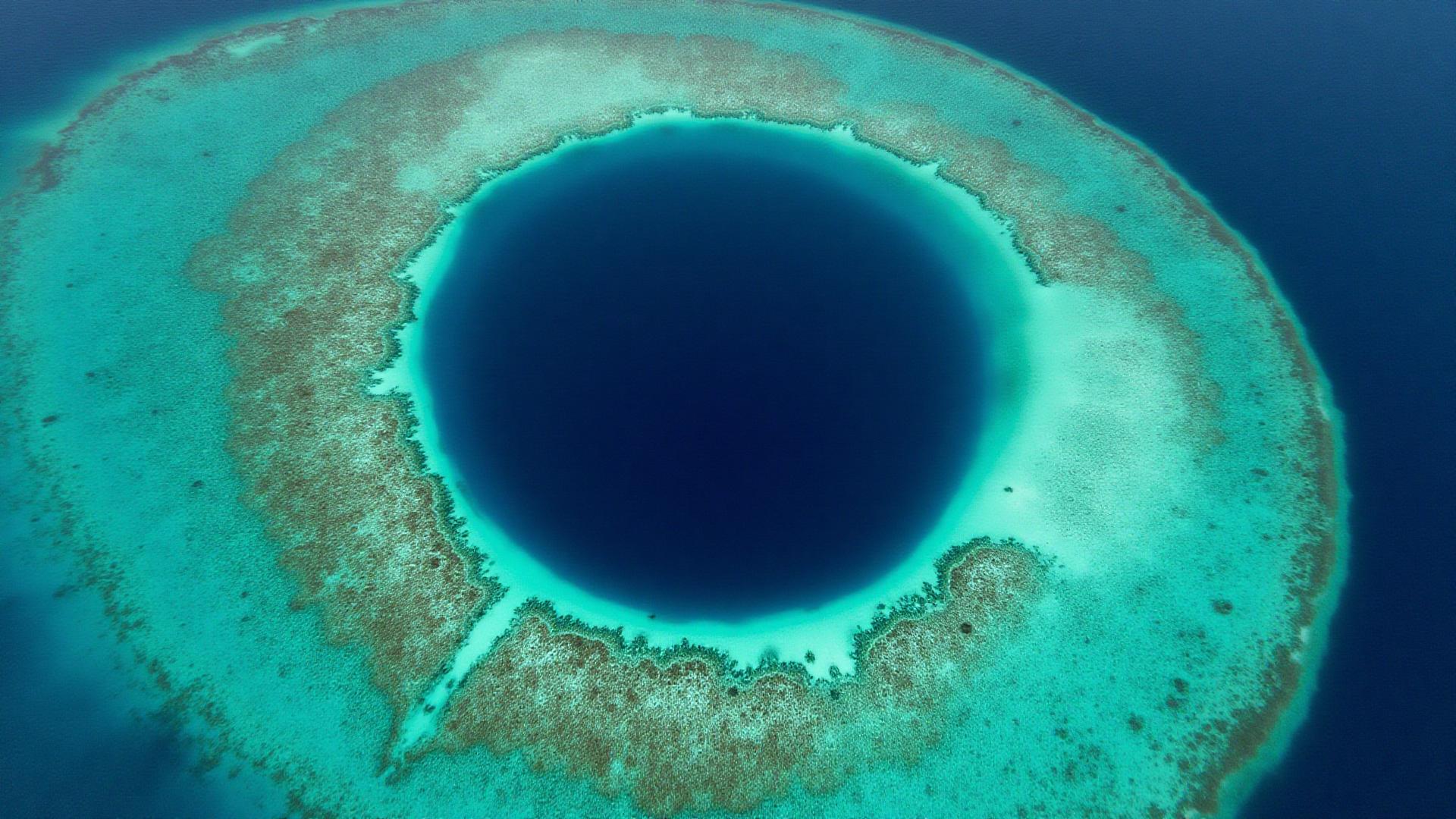
Located 60 miles offshore from Belize in the center of Lighthouse Reef atoll, this UNESCO World Heritage Site offers something no other dive can match: the chance to descend into a prehistoric underwater cave, swim past ancient stalactites formed during the last Ice Age, and potentially encounter Caribbean reef sharks patrolling the blue void below.
But let's be honest—the Great Blue Hole is as much about bragging rights as it is about the dive itself. This guide tells you exactly what to expect, who should (and shouldn't) make the trip, and why many experienced divers consider Belize's other dive sites even more spectacular.
📊 Quick Facts: Great Blue Hole
1,000 feet (300m)
407 feet (124m)
130 feet (40m)
Lighthouse Reef, 60 mi offshore
~10,000 years ago
World Heritage Site (1996)
Advanced Open Water required
$250-350 USD
Who Is This Guide For?
- ✓ Advanced certified divers seeking bucket-list experiences
- ✓ Geology and natural history enthusiasts
- ✓ Underwater photographers chasing iconic shots
- ✓ Travelers deciding whether the Blue Hole is worth the trip
- ✓ Divers planning Belize trips wanting context on all dive options
- ✓ Non-divers curious about scenic flights over the Blue Hole
What Is the Great Blue Hole?
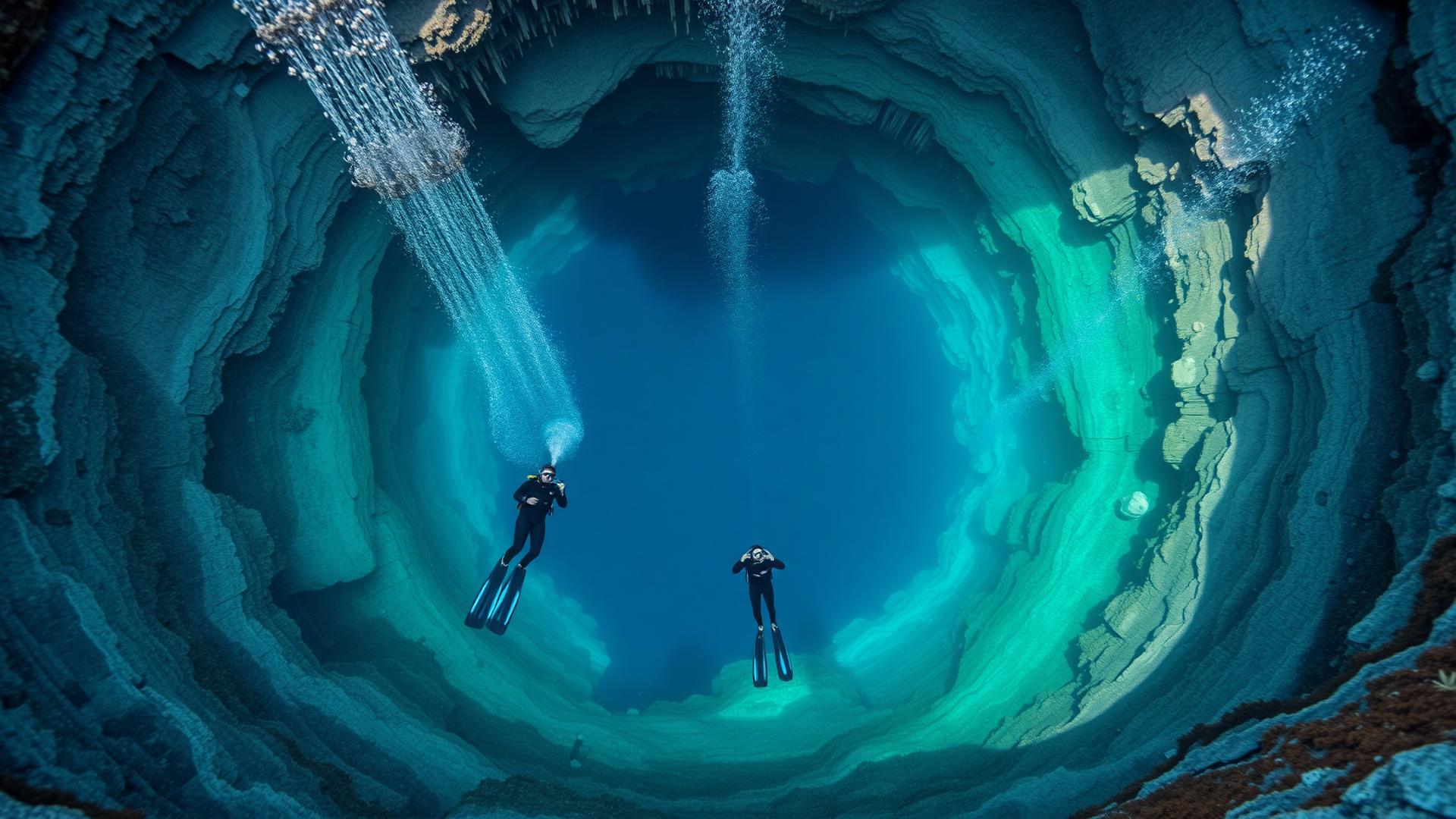
The Great Blue Hole is a giant marine sinkhole—a collapsed limestone cave system that formed during the last Ice Age when sea levels were 300-400 feet lower than today. Around 10,000 years ago, rising seas flooded this cavern, creating the perfectly circular underwater formation we see today.
The hole plunges 407 feet deep, though recreational divers descend only to about 130 feet where the main attraction lies: massive stalactites hanging from an overhanging limestone ledge. These ancient formations—some over 40 feet long—could only have formed in air, providing dramatic evidence that this underwater wonder was once a dry cave above the ocean surface.
Jacques Cousteau's 1971 expedition aboard the Calypso brought the Blue Hole to worldwide attention. His team's exploration confirmed the geological origins and captured images that sparked decades of diving pilgrimages. The Great Blue Hole became part of the Belize Barrier Reef Reserve System, designated a UNESCO World Heritage Site in 1996.
The Dive Experience: What to Expect
Understanding exactly what the Blue Hole dive involves helps set realistic expectations. This is a deep, technical dive with specific characteristics that differ dramatically from typical Caribbean reef diving.
The Descent
After a surface entry at the hole's edge, you descend along a sheer wall into the blue void. Visibility typically exceeds 100 feet, and the water color transitions from bright turquoise at the surface to increasingly deep blue as you descend. The sensation of dropping into a seemingly bottomless blue cylinder is surreal—there's nothing quite like it in recreational diving.
The Stalactite Cavern (110-130 feet)
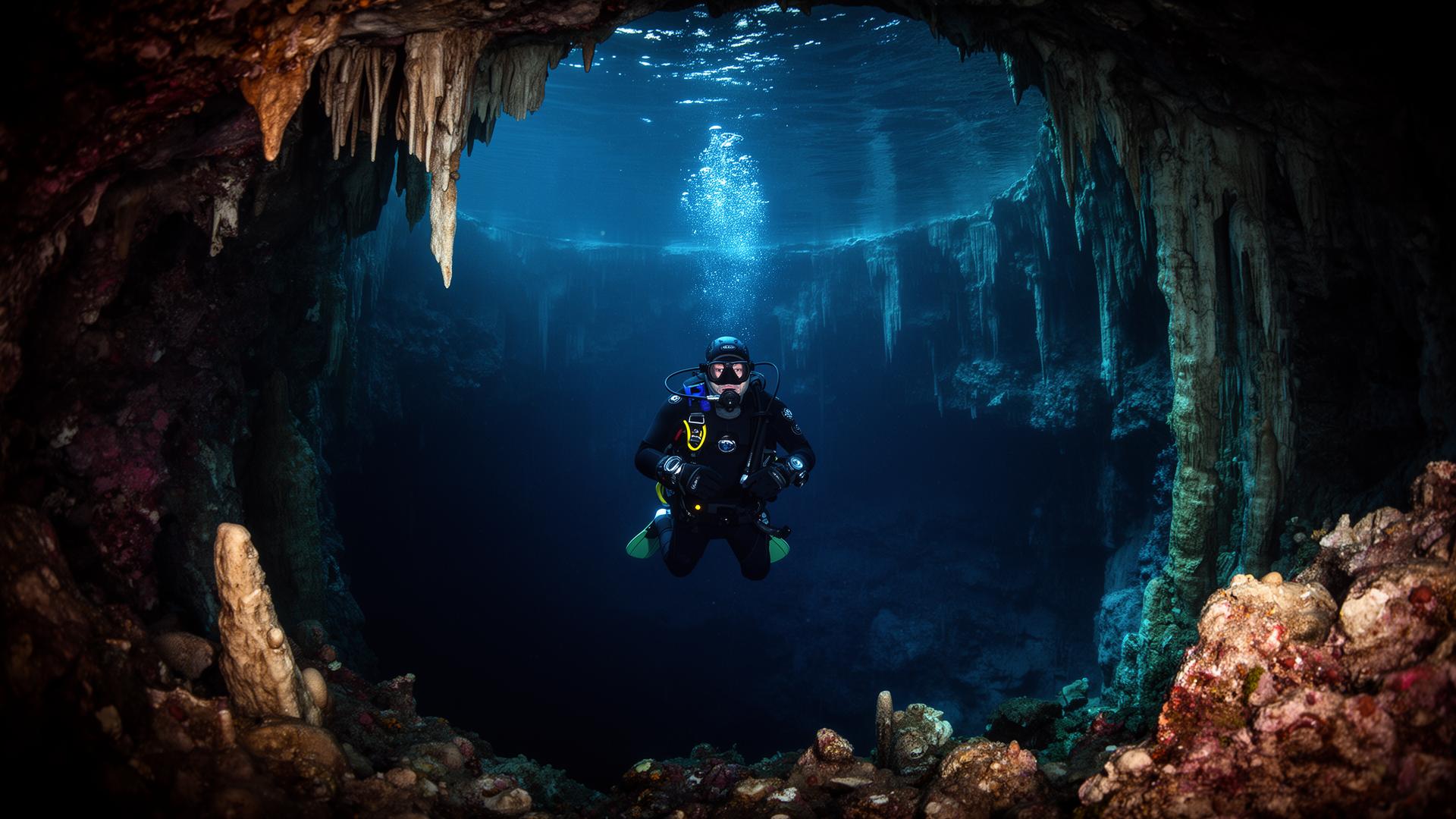
At approximately 110-130 feet depth, an overhanging ledge creates the cavern where ancient stalactites hang like stone icicles. Groups typically have 8-12 minutes at this depth before beginning their ascent—barely enough time to absorb the prehistoric atmosphere, photograph the formations, and swim along the ledge. The stalactites range from a few feet to over 40 feet long, and the darkness of the cavern contrasts dramatically with the blue light filtering from above.
Marine Life
Don't expect the abundant reef life found on shallow sites. The Blue Hole's depths support limited biodiversity—the main attractions are Caribbean reef sharks (typically 6-12 individuals) that patrol the mid-water column around 100 feet. Bull sharks occasionally appear, though sightings are less reliable. The sharks are accustomed to divers and generally keep a respectful distance while providing excellent photo opportunities.
The Ascent
The ascent requires careful attention to dive computers and decompression limits. Most profiles include a safety stop at 15 feet for 3-5 minutes. The total dive time is typically 25-35 minutes—much shorter than shallow reef dives due to depth and nitrogen loading.
🤿 Pro Tip: Manage Your Air & Expectations
Deep diving consumes air rapidly—you'll use 2-3 times more air at 130 feet than at 30 feet. Control your breathing, stay relaxed, and don't fight for extra bottom time. The experienced divers who enjoy the Blue Hole most are those who've already logged significant deep dives and can stay calm while managing the depth and limited time.
Requirements & Certification
The Great Blue Hole is not for beginners. Operators require:
- Advanced Open Water certification (or equivalent) minimum
- Deep Diver specialty recommended (some operators require it)
- Proof of logged dives—most operators want to see 20-50+ logged dives
- Recent dive experience—if you haven't dived in 6+ months, do a refresher first
- Comfort with deep diving—if 100+ feet makes you nervous, this isn't the dive for you
Be honest with yourself about your experience level. The Blue Hole isn't going anywhere—you can always come back when you have more dives logged. Divers who push beyond their comfort zone at depth create safety risks for themselves and their group.
Getting There: Day Trip Logistics
The Great Blue Hole lies 60 miles offshore, requiring significant travel time. Here's what a typical day trip involves:
Departure Points
Most trips depart from San Pedro (Ambergris Caye), Caye Caulker, or Belize City. San Pedro and Caye Caulker offer the shortest boat rides (1.5-2 hours), while Belize City departures take 2.5-3 hours each way.
Typical Schedule
Early morning departure (5:30-6:00 AM), arrive at Lighthouse Reef mid-morning. Most operators include three dives: the Blue Hole dive, followed by two shallower dives at the spectacular reef sites nearby (Half Moon Caye Wall, Long Caye Wall, or Aquarium). Return to port by late afternoon (4-5 PM). It's a long day—12+ hours door to door.
What's Included
Day trips ($250-350 USD) typically include three dives, tanks, weights, lunch, drinks, park fees, and transfers. Equipment rental costs extra ($30-50). Some operators include Nitrox for the shallow dives. Confirm exactly what's included when booking.
🤿 Book Great Blue Hole Diving Tours
Ready to check this bucket-list dive off your list? Browse top-rated Blue Hole day trips departing from San Pedro, Caye Caulker, and Belize City.
Search Activities on Klook →Best Time to Dive the Blue Hole
The Blue Hole is diveable year-round, but conditions vary:
Peak Season: December–May
Dry season brings the best conditions: calm seas for the long boat ride, excellent visibility (often 100+ feet), and comfortable weather. This is also high season for tourism, so book trips well in advance. March-April offers particularly stable conditions.
Shoulder Season: June–July
Early rainy season still offers good diving conditions. Afternoon showers are common but rarely affect morning departures. Fewer crowds and lower prices make this attractive for flexible travelers.
Hurricane Season: August–November
Trip cancellations become more common due to weather. While you might get lucky with perfect conditions, you also risk rough seas that cancel operations. If the Blue Hole is your primary reason for visiting, avoid these months.
📅 Pro Tip: Book Early, Stay Flexible
Blue Hole trips can cancel due to weather, mechanical issues, or insufficient bookings. Schedule your trip for early in your Belize visit so you have backup days if cancellation occurs. Most reputable operators reschedule or refund canceled trips, but you need flexibility in your schedule.
Is the Great Blue Hole Worth It? An Honest Assessment
Here's what most dive guides won't tell you: many experienced divers find the Blue Hole underwhelming compared to the spectacular reef diving elsewhere in Belize. Let's break down the honest pros and cons:
Why It's Worth It
- Bucket-list bragging rights—you've dived one of the world's most famous sites
- Unique geological experience—the ancient stalactites are genuinely impressive
- Shark encounters—Caribbean reef sharks are reliably present
- The "blue void" sensation—descending into the deep blue is surreal
- Bonus dives—the Lighthouse Reef sites included in day trips are spectacular
Why Some Divers Are Disappointed
- Limited marine life—no coral, minimal fish, just sharks and stalactites
- Short bottom time—8-12 minutes at depth feels rushed
- Long travel day—12+ hours for one 30-minute dive
- High cost—$300+ for a deep dive that many find less exciting than $60 reef dives
- Better alternatives—the Half Moon Caye Wall and Hol Chan offer more vibrant experiences
The verdict: If you're an experienced diver who can afford the time and money, the Blue Hole is worth doing once. The geological significance and bragging rights make it a legitimate bucket-list item. But if you're choosing between the Blue Hole trip and three days of reef diving, many divers recommend the reef—you'll see far more marine life and have more memorable underwater experiences.
Alternative: Scenic Flights Over the Blue Hole
Non-divers (or divers short on time) can experience the Blue Hole's iconic beauty from above. Scenic flights from San Pedro or Belize City offer spectacular aerial views that many argue are more impressive than the underwater experience.
30-45 minute flights circle the Blue Hole multiple times, providing perfect photo opportunities of the iconic dark blue circle against the turquoise reef. Prices range from $150-250 per person depending on aircraft and duration. Morning flights typically offer the best lighting and smoothest air.
🏨 Book Hotels in Belize
Stay in San Pedro, Caye Caulker, or Belize City for easy Blue Hole access. Find dive-friendly resorts, beachfront hotels, and budget accommodations.
Search Hotels on Booking.com →Other World-Class Belize Dive Sites
Whether you dive the Blue Hole or not, Belize offers incredible alternatives along the world's second-largest barrier reef:
Half Moon Caye Wall
Located at Lighthouse Reef (included on most Blue Hole trips), this dramatic wall dive drops from 30 feet to over 3,000 feet. Vibrant coral gardens, eagle rays, and diverse marine life make this many divers' favorite Belize site.
Hol Chan Marine Reserve
Just minutes from San Pedro, this protected area offers shallow, beginner-friendly diving with abundant marine life. Adjacent Shark Ray Alley guarantees nurse shark and stingray encounters in just 8 feet of water—perfect for snorkelers too.
Turneffe Atoll
The largest atoll in Belize offers pristine wall diving, healthy coral, and fewer crowds than the main reef. Multi-day liveaboard trips provide the most comprehensive Turneffe experience.
Gladden Spit
Between March and June, whale sharks gather here to feed on snapper spawn. Diving with these gentle giants is an unforgettable experience—arguably more remarkable than the Blue Hole.
Where to Stay for Blue Hole Access
San Pedro (Ambergris Caye)
The most popular base for Blue Hole trips. San Pedro offers the widest selection of dive operators, accommodations, restaurants, and nightlife. Boat rides to Lighthouse Reef take 1.5-2 hours from here.
Caye Caulker
More laid-back and budget-friendly than San Pedro. Several operators run Blue Hole trips from here. The "Go Slow" island vibe appeals to backpackers and those seeking authentic Caribbean atmosphere.
Belize City
If you're arriving late or leaving early, Belize City operators offer Blue Hole trips. The boat ride is longer (2.5-3 hours) but eliminates the need for island transfers.
Getting to Belize
Philip S.W. Goldson International Airport (BZE) near Belize City serves as the main gateway, with direct flights from Houston, Dallas, Atlanta, Miami, and other US cities. From the airport:
- To San Pedro: Domestic flights (15 minutes) or water taxi (1.5 hours)
- To Caye Caulker: Water taxi (45 minutes) or flight
- To Belize City: Taxi (30 minutes)
✈️ Search Flights to Belize
Compare fares to Belize City (BZE) from major US hubs. Find the best deals for your diving adventure.
Search Flights on Aviasales →🦈 Pro Tip: Combine with Cozumel
The Cozumel National Marine Park and Great Blue Hole make an excellent diving combination—both are part of the Mesoamerican Barrier Reef system but offer completely different experiences. Cozumel provides world-class drift diving through healthy coral gardens, while the Blue Hole offers deep adventure diving. Many divers combine a Belize week with a few days in Cozumel via quick flights through Cancun.
Editorial Moment: There's a particular moment during the Blue Hole descent—around 80 feet, when the reef rim above shrinks to a turquoise halo and the abyss below deepens to impossible blue—when you understand why this place captivates the human imagination. You're floating in a 10,000-year-old cathedral, surrounded by stalactites that predate human civilization, and the sharks circling below seem less like predators than guardians of something ancient. It's not the most colorful dive you'll ever do. But it might be the one you think about most.
Frequently Asked Questions
What is the Great Blue Hole?
The Great Blue Hole is a giant marine sinkhole located 60 miles offshore from Belize in Lighthouse Reef atoll. It measures 1,000 feet across and 407 feet deep, formed when a limestone cave system collapsed during the last Ice Age around 10,000 years ago. It's a UNESCO World Heritage Site and one of the world's most famous dive sites.
How deep do you dive in the Great Blue Hole?
Recreational divers descend to approximately 130 feet (40 meters) where the stalactite formations and overhanging ledge are located. While the hole itself reaches 407 feet, going deeper requires technical diving certifications and equipment. Most divers spend 8-12 minutes at maximum depth before ascending.
What certification do I need to dive the Blue Hole?
Advanced Open Water certification is the minimum requirement. Many operators also require or recommend Deep Diver specialty certification. You'll need proof of logged dives (typically 20-50+) and recent dive experience. This is not a dive for beginners—be honest about your comfort level with deep diving.
How much does a Great Blue Hole trip cost?
Day trips typically cost $250-350 USD per person, including three dives, tanks, weights, lunch, drinks, and park fees. Equipment rental costs extra ($30-50). Prices vary by operator and departure point. Expect a full 12+ hour day from early morning to late afternoon.
What will I see during the Blue Hole dive?
The main attractions are ancient stalactites (some over 40 feet long) that formed when this cave was above sea level during the Ice Age. You'll likely see Caribbean reef sharks (typically 6-12) patrolling mid-water, and occasionally bull sharks. Don't expect colorful coral or abundant fish—the deep hole supports limited marine life compared to shallow reefs.
Is the Great Blue Hole dangerous?
The dive itself is relatively straightforward for experienced deep divers, but the depth creates inherent risks. Nitrogen narcosis can occur at 130 feet, air consumption increases dramatically at depth, and there's no coral reference for depth perception. Divers who panic or exceed their limits at depth face serious consequences. Stick with reputable operators who enforce certification requirements.
What's the best time of year to dive the Blue Hole?
December through May (dry season) offers the best conditions with calm seas, excellent visibility, and comfortable weather. June-July can also be good despite occasional afternoon rain. Avoid August-November if the Blue Hole is your priority—hurricane season brings frequent trip cancellations.
How long is the boat ride to the Blue Hole?
From San Pedro or Caye Caulker: 1.5-2 hours each way. From Belize City: 2.5-3 hours each way. The total day trip runs 12+ hours including travel, three dives, lunch, and surface intervals. Be prepared for an early morning departure (5:30-6:00 AM).
Can non-divers visit the Great Blue Hole?
Yes! Scenic flights from San Pedro or Belize City offer spectacular aerial views. The iconic circular formation is actually more impressive from above. 30-45 minute flights cost $150-250 per person and provide perfect photo opportunities. This is an excellent option for non-divers traveling with diving companions.
Is the Blue Hole worth it compared to other Belize diving?
It depends on your priorities. The Blue Hole offers unique geological features and bucket-list bragging rights, but many experienced divers find Belize's reef diving (Hol Chan, Half Moon Caye Wall, Turneffe Atoll) more exciting with more marine life. If you can do both, great. If you must choose, consider whether you value geological novelty or abundant marine encounters.
Are there sharks in the Great Blue Hole?
Yes! Caribbean reef sharks reliably patrol the mid-water column around 100 feet depth, and you'll typically see 6-12 individuals. Bull sharks are occasionally spotted but less common. The sharks are accustomed to divers and generally maintain a respectful distance—they're a highlight of the dive, not a threat.
Who discovered the Great Blue Hole?
While local fishermen knew of the formation for centuries, Jacques Cousteau brought it to worldwide attention in 1971 when he explored it aboard the Calypso. His expedition confirmed the geological origins, documented the stalactite formations, and captured footage that made the Blue Hole internationally famous.