What to Expect on Your First Open Water Dive
From pre-dive briefings to post-dive elation—a honest look at what your first real scuba dive feels like.
By BeachLoco Editorial
Underwater Magic
30-45 Minutes
40-60 Feet
Mask Clear, Reg Recovery
Excitement + Nervousness
Varies by Location
Nothing quite prepares you for the moment when you first draw a breath underwater and realize it works. Your body wants to believe it's impossible — millions of years of evolution have conditioned your brain to surface for air. But the regulator delivers, your lungs fill, and suddenly you're breathing in an environment that should be hostile, feeling more at home than you ever imagined.
That transformative moment is coming for you. But between now and then, your mind probably races with questions: What does it actually feel like? What if something goes wrong? How will I know what to do? This guide walks you through the complete first open-water dive experience — the sensations, the skills, the psychological journey — so you arrive with realistic expectations and the confidence that comes from preparation.
Before the Dive: Mental and Physical Preparation
Your first open-water dive begins hours before you enter the water. The preparation phase sets the tone for everything that follows.
The Morning Before
Eat a light breakfast — enough fuel for exertion but not so much that seasickness becomes an issue if you're boat diving. Hydrate well but avoid excessive caffeine, which can increase anxiety and accelerate air consumption. Avoid alcohol the night before; even mild hangovers affect judgment and equalization ability.
Arrive at the dive shop early. Rushing creates stress that carries underwater. Use the extra time to double-check equipment, ask last-minute questions, and simply sit with the experience about to unfold.
Equipment Setup
Your instructor will guide you through assembling equipment: attaching the regulator to the tank, connecting the BCD inflator hose, checking that air flows properly. Pay attention to this process — you'll eventually do it yourself, and understanding the equipment reduces anxiety about relying on it.
Everything will feel bulky and awkward on land. The BCD jacket, weighted belt, tank, and fins transform you into something between an astronaut and a turtle. This is normal. Equipment that feels impossibly heavy on the surface becomes nearly weightless underwater.
The Dive Briefing
Your instructor will explain exactly what will happen: the dive site, expected conditions, maximum depth, signals you'll use, skills you'll practice, and how to handle any problems. Listen actively. Visualize each step. Ask questions about anything unclear — there are no stupid questions when you're about to breathe underwater for the first time.
Entering the Water: The Transition Zone
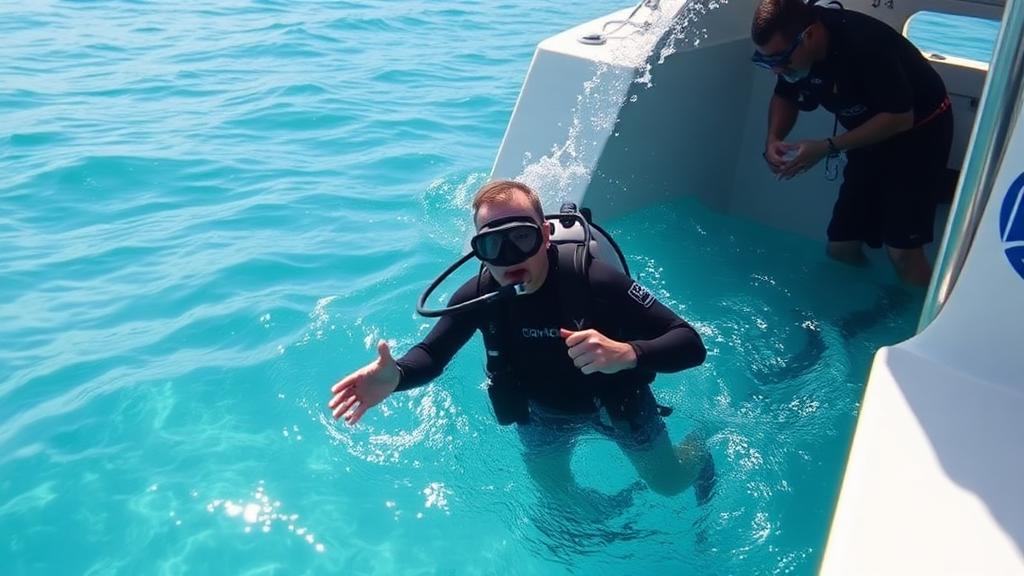
Whether you're walking off a beach or stepping off a boat, the water entry marks the psychological transition from observer to participant.
Beach Entries
Walking into the surf while wearing full scuba gear feels clumsy. Small waves will push you off balance. Your fins will catch on sand. This is the least graceful part of diving — embrace the awkwardness. Once you're chest-deep, everything changes. Float on your back, put your fins on, and suddenly you're in your element.
Boat Entries
The giant stride entry — holding your mask and regulator while stepping off the boat platform into open water — creates its own adrenaline moment. You'll fall about three feet before the water catches you. The splash surrounds you, and for a moment you're enveloped in bubbles before bobbing to the surface.
Your first few boat entries feel dramatic. By your fifth dive, they're routine. Trust the process — thousands of divers make this entry every day without incident.
The Descent: Leaving the Surface World
Floating at the surface, you'll exchange OK signals with your instructor and begin venting air from your BCD to start sinking. This is where many new divers experience their strongest psychological response.
Ear Equalization
As you descend, pressure increases and your ears may feel blocked or squeezed. Equalization — pinching your nose and gently blowing, swallowing, or wiggling your jaw — pushes air into your middle ear to match the outside pressure. Practice this technique on the surface first.
Descend slowly, equalizing early and often. If your ears won't clear, ascend a few feet and try again. Never force it — ear injuries from failed equalization are diving's most common injury, and they're entirely preventable by respecting the message your body sends.
The Psychological Shift
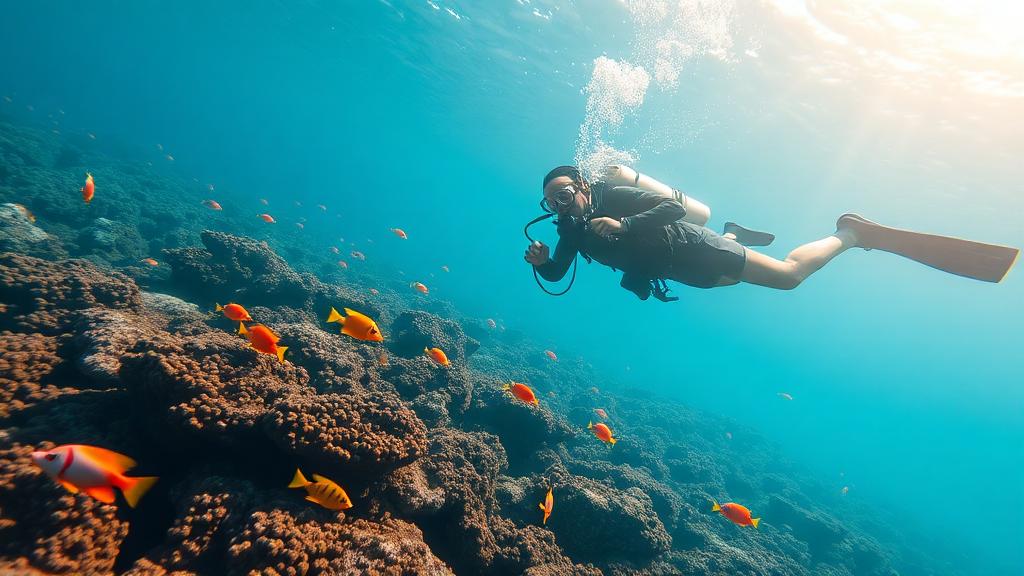
Somewhere between 10 and 30 feet, many divers experience a distinct psychological shift. The surface recedes above you. Sunlight filters down in rays and patterns. The sounds of the world above — boats, voices, wind — vanish, replaced by the rhythm of your own breathing and the distant clicking of marine life.
This moment can trigger anxiety in some divers — the realization that you're in an environment where humans don't naturally belong. Take a slow breath. Look at your instructor. Remember that the same equipment that delivered air a moment ago continues working exactly the same. The anxiety typically passes within seconds, replaced by wonder as the reef comes into focus.
Underwater: The Experience Unfolds
Now you're diving. The equipment that felt so awkward on land disappears from consciousness. Your attention expands to take in an environment more alien than most science fiction can conjure.
Buoyancy and Movement
Neutral buoyancy — the state of neither floating up nor sinking down — takes practice to master. On your first dive, don't expect perfection. You'll probably bounce between too heavy (sinking toward the bottom) and too light (drifting toward the surface). Your instructor will help you find the right amount of weight and air in your BCD to hover.
Movement underwater follows different rules than movement on land. Kick with your whole leg from the hip, not just your knees. Keep your arms still — they don't help propulsion and only waste energy. Slow, deliberate fin strokes move you efficiently; frantic kicking exhausts you.
Breathing Underwater
Your breath now serves two purposes: respiration and buoyancy control. Deep breaths expand your lungs and lift you; exhales shrink your chest and let you sink. Experienced divers adjust their position in the water column primarily through breathing rather than BCD adjustments.
New divers often breathe too fast, consuming air quickly and reducing bottom time. Consciously slow your breathing. Long, slow inhales. Relaxed, complete exhales. This rhythm extends your air supply and reduces anxiety — the body interprets slow breathing as a signal that everything is fine.
Marine Life Encounters
The reef teems with life that ignores you, approaches you, and occasionally investigates you. Schools of fish part around your bubbles. Cleaning stations host fish waiting their turn for parasite removal. Sea turtles cruise past with ancient indifference. Octopuses change color as they flow across the reef.
Resist the urge to chase or touch. Marine life that feels comfortable will approach on its own; pursuit only drives it away. Position yourself in their path and let them come to you. Some fish — particularly sergeant majors and damselfish — may even approach to defend their territory, creating memorable face-to-face encounters.
Skills Practice: Building Competence
Your first open-water dive isn't just about sightseeing — you'll demonstrate skills that prove you can handle common situations.
Mask Clearing
Water will eventually enter your mask — a slow leak, a bump, or intentional removal during training. Clearing water from a flooded mask is a fundamental skill: look up slightly, press the top of the mask frame against your forehead, and exhale through your nose. The air forces water out through the bottom seal.
This skill feels alarming until you've done it a few times. The key insight: you can still breathe through your regulator even with a flooded mask. The water is uncomfortable, not dangerous. Once you've practiced the clearing technique several times, it becomes automatic.
Regulator Recovery
What if your regulator comes out of your mouth? This occasionally happens — a buddy bumps you, a piece of equipment snags, or you knock it loose yourself. The recovery procedure involves sweeping your right arm back and forward in a wide arc, catching the regulator hose, and returning the regulator to your mouth. If water entered, a brief exhale clears it.
You'll practice this skill intentionally, removing and replacing your regulator while breathing from a backup air source. The exercise proves to your brain that losing the regulator isn't a crisis — just a momentary inconvenience with a simple solution.
Controlled Ascent
Ascending too quickly can cause decompression sickness — nitrogen bubbles forming in tissues as pressure decreases. Your dive computer or the instructor's guidance will keep you at a safe ascent rate (typically 30 feet per minute or slower). At the end of most dives, you'll pause at 15 feet for a 3-minute safety stop, allowing additional nitrogen to off-gas safely.
During the ascent, watch your exhaled bubbles — they should rise faster than you do. If you're ascending faster than your bubbles, you're going too fast. Slow down, add a small amount of air to your BCD if needed, and maintain control.
Post-Dive: Processing the Experience
Surfacing after your first real open-water dive, you'll likely feel a rush of emotions: accomplishment, exhilaration, relief, and an immediate desire to do it again. The underwater world you just visited will replay in your mind, details sharpening as your brain processes the experience.
Logging Your Dive
Record the details in your dive log: date, location, maximum depth, bottom time, water temperature, visibility, wildlife seen. These records matter for future certification courses, equipment recommendations, and your own memories. Digital logs sync with dive computers; paper logs offer the satisfaction of a physical record.
Physical Aftereffects
You may feel tired after diving — the combination of exertion, breathing dense air, and psychological intensity takes energy. Some divers experience mild headache or sinus pressure as their body adjusts. Stay hydrated, avoid flying for at least 18 hours, and rest if needed.
Processing Fear and Anxiety
If you experienced anxiety during the dive, don't interpret it as a sign that diving isn't for you. Almost every diver has felt underwater anxiety at some point. The key is whether the anxiety was manageable — whether you could acknowledge the feeling, breathe through it, and continue functioning. That ability to manage fear, not the absence of fear, marks successful divers.
Talk about your experience with your instructor and fellow students. Sharing the intensity — the moments of concern and the moments of wonder — helps integrate the experience and builds the community that makes diving special.
Building Confidence Through Repetition
Your first dive is just the beginning. The Open Water certification typically includes four open-water dives, each building on the last. By your fourth dive, tasks that felt overwhelming on dive one — descending, equalizing, clearing your mask — become automatic. You'll spend less time thinking about skills and more time enjoying the environment.
After certification, continue diving. The best way to become a confident diver is to dive. Each experience builds pattern recognition: you've seen that type of surge before, you know what happens when current picks up, you recognize the signs that visibility is changing. Competence comes from repetition, and diving regularly in the months after certification cements your skills.
What If Something Feels Wrong?
Trust your instincts underwater. If something feels wrong — equipment malfunction, anxiety that isn't manageable, physical discomfort — communicate with your instructor and ascend if necessary. No dive is worth injury or trauma.
Signs to take seriously include: persistent ear pain despite equalization attempts, unusual difficulty breathing, severe anxiety or panic, confusion or disorientation, or numbness and tingling. Signal your buddy, ascend slowly, and address the issue on the surface.
The vast majority of first dives proceed without incident. But knowing that you can end a dive at any time — that you have agency even in an unfamiliar environment — is itself a source of confidence.
Frequently Asked Questions
Is it normal to feel scared on your first open-water dive?
Absolutely. Mild to moderate anxiety is nearly universal on first dives. Your brain is processing a completely novel situation in an environment where you're not naturally equipped to survive. Quality instructors expect this reaction and know how to help you work through it. The fear typically diminishes quickly as you realize the equipment works and you can function underwater.
How deep will I go on my first dive?
First certification dives typically stay between 30-60 feet, depending on the training agency and location. This depth provides genuine underwater experience while keeping you within safe limits for new divers. You'll practice skills in the shallower portions and explore the reef at comfortable depths.
What happens if I can't equalize my ears?
If equalization fails, ascend a few feet and try again. Sometimes changing your head position helps. If you genuinely cannot equalize despite multiple attempts, end the dive — forcing through equalization problems causes ear injuries. Congestion from colds, allergies, or sinus issues can make equalization temporarily impossible; reschedule if you're congested.
What if I need to cough or sneeze underwater?
You can cough into your regulator — it's designed for this. Keep the regulator in your mouth, cough normally, and continue breathing. Sneezing is trickier; if you feel one coming, hold your mask firmly against your face to prevent dislodging it. Both are manageable with a bit of practice.
How long will my first dive last?
Training dives typically last 30-45 minutes, limited by air consumption and training objectives rather than no-decompression limits. New divers often consume air faster than experienced divers due to exertion and breathing rate. As you relax and refine your technique, dive times extend naturally.
Can I touch the marine life I see?
As a general rule, no. Touching can harm marine life (your skin oils damage coral, for example), startle creatures into defensive responses, or expose you to stings and bites. Many marine parks prohibit touching anything. Observe without contact — the experiences are just as meaningful and far more sustainable.
Continue Your Diving Journey
After your first open water dive, the ocean is yours to explore. The best scuba diving beaches around the world await, from the reefs of Key West to the cenotes near Cancun. Not ready for scuba yet? Our beginner snorkeling guide is the perfect stepping stone.