Mayan Ruins Near the Beach: A Complete Guide to Mexico's Ancient Coastal Wonders
From Tulum's clifftop temples overlooking the Caribbean to jungle pyramids you can still climb—discover the best Mayan archaeological sites near Mexico's stunning Riviera Maya beaches.
By BeachLoco Editorial
Standing atop the weathered limestone cliffs of Tulum, ancient stone walls frame a view that has remained essentially unchanged for 800 years—turquoise Caribbean waters meeting powder-white sand, with palm trees swaying in the tropical breeze. This is the only major Mayan archaeological site built directly on the beach, and it remains one of the most photographed ruins in the Americas.
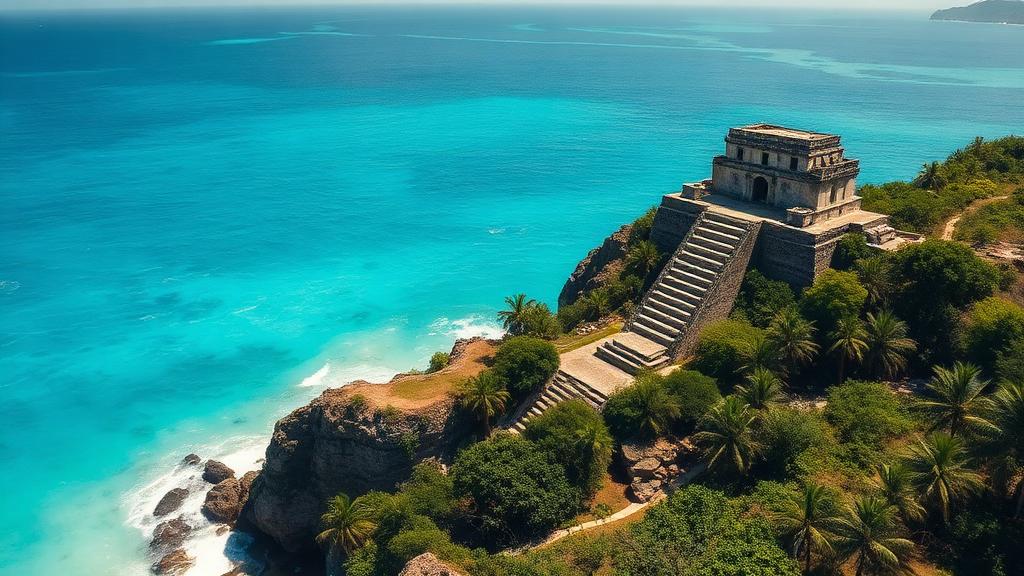
But Tulum is just the beginning. Scattered across Mexico's Yucatan Peninsula are dozens of Mayan ruins, from intimate coastal sites perfect for a morning excursion to massive jungle cities that rival anything in Egypt or Rome. The best part? Many of these archaeological wonders are within easy day-trip distance of the Riviera Maya's famous beach resorts.
Whether you're lounging in Cancun, exploring Playa del Carmen, or relaxing in Tulum, you're never far from temples, pyramids, and cenotes (sacred sinkholes) that reveal why the Maya civilization was one of history's most advanced cultures.
Quick Facts: Mayan Ruins Near the Beach
Best Beach Ruins
Tulum
Closest to Cancun
El Meco (5 km)
Best for Climbing
Coba (42m pyramid)
World Heritage Site
Chichen Itza
Who Is This Guide For?
- Beach vacationers wanting to add cultural day trips to their itinerary
- History enthusiasts fascinated by ancient civilizations
- Adventure travelers seeking pyramid-climbing experiences
- Families looking for educational excursions
- Photographers chasing iconic shots of ruins against Caribbean backdrops
- Cruise ship passengers on port calls to Cozumel or Costa Maya
1. Tulum: The Iconic Beachside Ruins
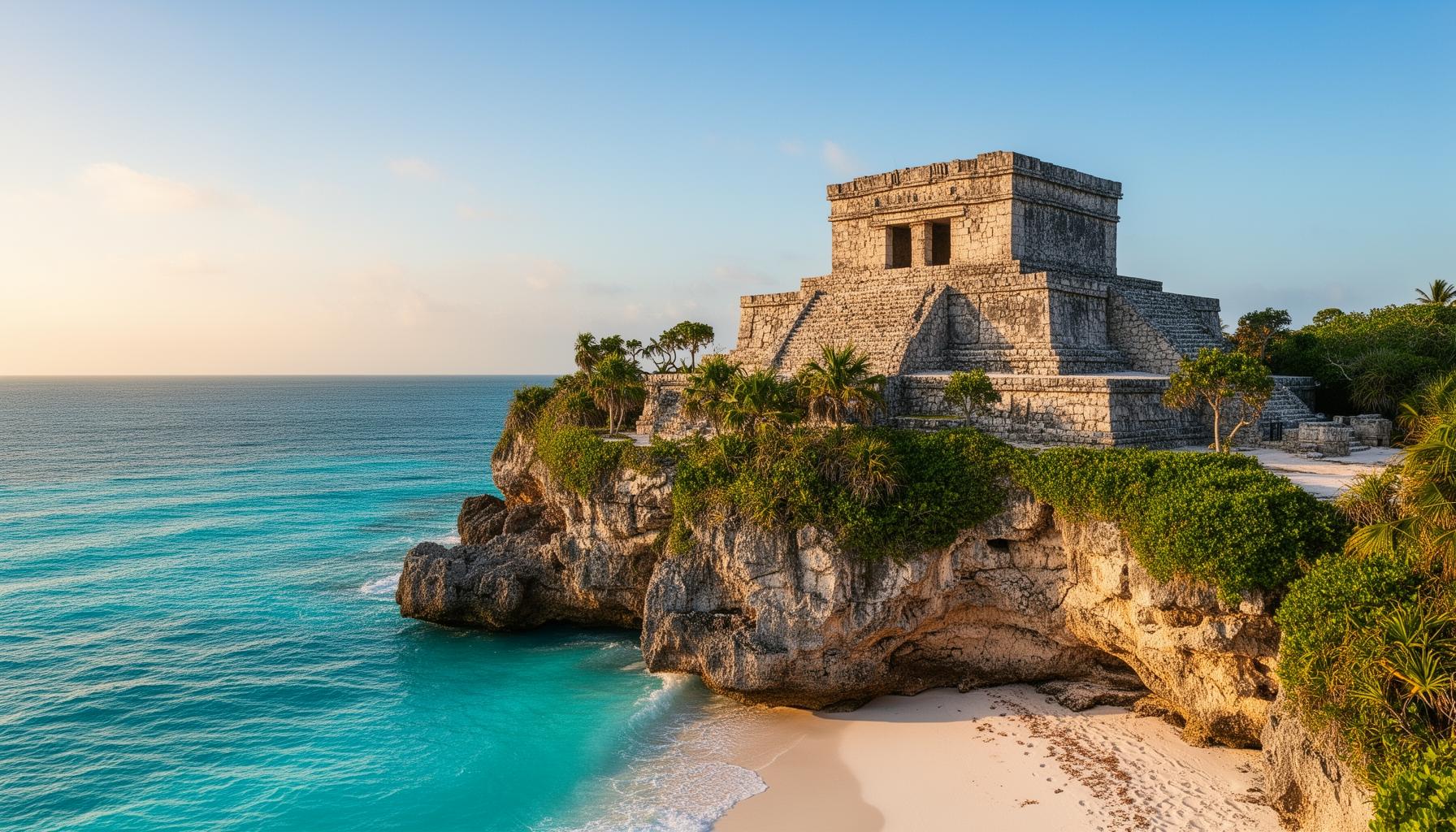
The undisputed star of beachfront archaeology. Tulum is the only major Mayan city built directly on the Caribbean coast, its ancient walls and temples perched dramatically on 40-foot cliffs overlooking some of Mexico's most beautiful turquoise waters.
Originally called Zama ("City of Dawn"), Tulum was a thriving port city from the 13th to 15th centuries, serving as a commercial hub for jade, obsidian, and cacao trade. Unlike most Mayan cities, Tulum was still inhabited when Spanish conquistadors arrived in 1518—making it one of the last functioning Mayan settlements.
What to See at Tulum
- El Castillo: The iconic temple perched on the clifftop, Tulum's most photographed structure
- Temple of the Frescoes: Features rare surviving Mayan murals with blue and green pigments
- Temple of the Descending God: Named for the upside-down carved figure above its doorway
- The Beach: Access stairs lead down to a stunning cove where you can swim below the ruins
Pro Tip: Beat the Crowds
Arrive when gates open at 8:00 AM. By 10 AM, the site is packed with tour buses from Cancun. Early morning light is also ideal for photography, with soft golden rays illuminating the temples against the deep blue sea.
Tulum Essentials
| Hours | 8:00 AM – 5:00 PM daily |
| Entrance Fee | ~95 MXN (~$5 USD) |
| Time Needed | 2-3 hours (including beach time) |
| Distance from Cancun | 130 km (~2 hours) |
| Can You Climb? | No (structures are roped off for preservation) |
2. El Meco & El Rey: Cancun's Convenient Ruins
Don't want to spend half your beach vacation on a tour bus? These two compact sites are perfect for a quick archaeological fix without leaving the Cancun hotel zone.
El Meco
Just 5 kilometers north of downtown Cancun, El Meco features the tallest pyramid in the region (12.5 meters) and offers a refreshingly uncrowded experience. This ancient port city was active from 300 AD until Spanish contact, serving as an important trading hub connecting the coast with inland Mayan centers.
Highlights: Climb the main pyramid for views of Isla Mujeres, explore the Temple of the Descending God, and enjoy iguana sightings throughout the site.
El Rey
Located within Cancun's hotel zone near Kilometer 18, El Rey (The King) was named for a sculpted head found among its ruins. This compact site features 47 structures along a main street, giving visitors a sense of urban Mayan life.
Best for: Travelers short on time, families with young children, or anyone wanting to explore ruins on foot from their hotel. The site is famous for its resident iguanas—dozens bask on the ancient stones.
| Site | Distance from Cancun | Time Needed |
| El Meco | 5 km (10 min) | 1-1.5 hours |
| El Rey | 20 km (Hotel Zone) | 45 min - 1 hour |
3. Chacchoben: The Cruise Ship Favorite
If you're arriving by cruise ship at Costa Maya, Chacchoben (pronounced "cha-CHO-ben") is your most accessible Mayan experience. Located about 70 km from the port, this jungle-shrouded site offers an intimate alternative to the crowded mega-sites.
Chacchoben means "Place of Red Corn" in Mayan, and the site dates back to 200 AD. Unlike Tulum's coastal setting, Chacchoben is deep in the jungle—expect to hear howler monkeys and see spider monkeys swinging through the canopy.
Why Choose Chacchoben?
- Fewer crowds: Receives a fraction of Tulum's visitors
- Jungle atmosphere: Surrounded by dense tropical forest
- Perfect for cruise passengers: Easy round-trip from Costa Maya port
- Still climbable: You can ascend some structures here
🏛️ Book Mayan Ruins Tours & Excursions
Expert-guided tours include transportation, entrance fees, and local insights you won't get exploring independently.
Browse Tours & Activities →4. Coba: Climb the Tallest Pyramid You're Still Allowed To
If climbing a Mayan pyramid is on your bucket list, Coba is your destination. While Chichen Itza's famous pyramid has been closed to climbers since 2006, Coba's Nohoch Mul pyramid remains open—and at 42 meters (138 feet), it's the tallest in the Yucatan Peninsula.
Set within a vast jungle reserve dotted with lagoons, Coba once rivaled Chichen Itza in size and importance. At its peak around 600 AD, the city may have housed 50,000 residents. Today, only about 5% of the site has been excavated—the rest remains hidden beneath centuries of jungle growth.
The Nohoch Mul Experience
The climb is 120 steep stone steps with a rope handrail. It's challenging—especially in tropical heat—but the panoramic view from the top, overlooking endless green canopy stretching to the horizon, is unforgettable. On clear days, you can see lagoons glittering through the trees.
Pro Tip: Hydration is Essential
Bring at least 2 liters of water per person. The site is massive (you'll walk or bike 2+ km to reach the pyramid), and the climb is strenuous. Start early morning before the midday heat peaks.
Getting Around Coba
The archaeological zone covers 80 square kilometers. Most visitors rent bicycles (50 MXN) or hire bike-taxis (150-200 MXN round-trip) to navigate the ancient sacbe (white stone roads) connecting the pyramids. Walking is possible but adds 1-2 hours to your visit.
| Distance from Tulum | 45 km (~45 min) |
| Distance from Cancun | 165 km (~2.5 hours) |
| Entrance Fee | ~95 MXN (~$5 USD) |
| Time Needed | 3-4 hours |
5. Ek Balam: The Hidden Gem with Cenotes
Ask archaeologists which Mayan site exceeds expectations, and many will say Ek Balam. This lesser-known site near Valladolid features one of the best-preserved stucco friezes in the Mayan world—an intricate "monster mouth" doorway that was buried for centuries, protecting it from the elements.
Ek Balam means "Black Jaguar" in Mayan, and the site was a powerful city-state from 100 BC to 1000 AD. Its Acropolis pyramid, while smaller than Coba's Nohoch Mul, can still be climbed and offers stunning views of the surrounding jungle.
The Stucco Frieze
The highlight of Ek Balam is the elaborate stucco facade on the Acropolis, featuring a giant jaguar mouth doorway flanked by detailed human figures. This level of preservation is extraordinary—most exposed Mayan stucco work has weathered away over the centuries.
Cenote Xcanche
Just a 15-minute walk (or 5-minute bike ride) from the ruins, Cenote Xcanche offers a refreshing reward after exploring. This community-managed cenote features swimming, cliff jumping, and rappelling options—the perfect complement to your archaeological morning.
🏨 Book Hotels in Tulum & Riviera Maya
Stay near the ruins for early morning access and avoid the tour bus crowds.
Search Hotels →6. Chichen Itza: The New World Wonder
No guide to Mayan ruins would be complete without Chichen Itza, voted one of the New Seven Wonders of the World in 2007. While it's further inland (about 2.5 hours from Cancun), this UNESCO World Heritage Site is the most-visited archaeological zone in Mexico—and for good reason.
Chichen Itza was one of the largest Mayan cities, flourishing from 600 to 1200 AD. The site blends Mayan and Toltec architectural styles, reflecting the complex cultural exchanges of ancient Mesoamerica.
The Kukulkan Pyramid
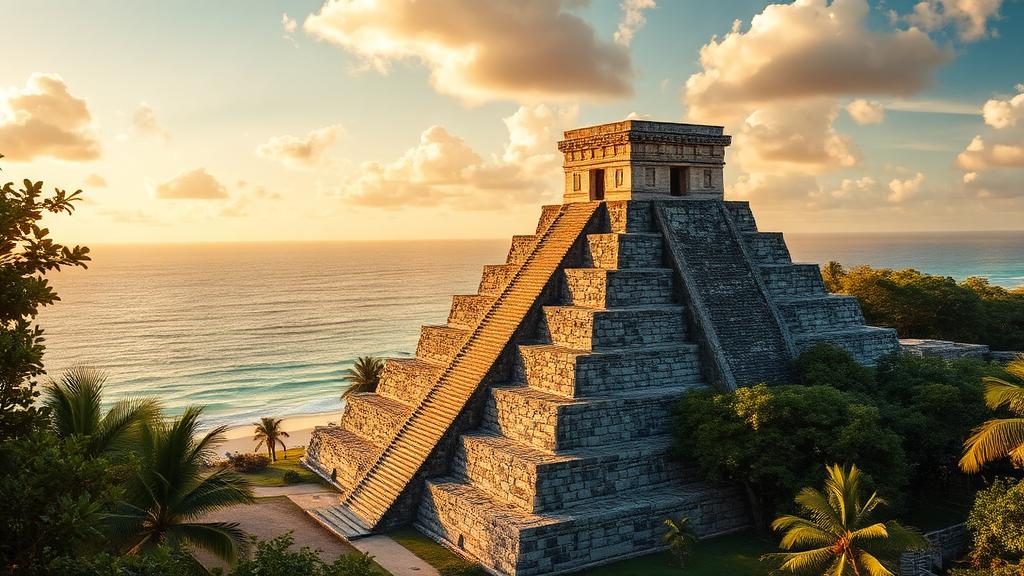
El Castillo, the Temple of Kukulkan, is an astronomical marvel. The pyramid has 365 steps (one for each day of the year), and during the spring and fall equinoxes, the sun casts a serpent-shaped shadow that appears to slither down the northern staircase—a phenomenon witnessed by thousands of visitors each March and September.
Other Must-See Structures
- The Great Ball Court: The largest Mesoamerican ball court, with incredible acoustics
- Temple of the Warriors: Featuring the famous reclining Chac Mool sculpture
- El Caracol: An ancient observatory used to track Venus and the stars
- Sacred Cenote: A sinkhole used for sacrificial offerings
Pro Tip: Skip the Midday Madness
Either arrive at 8 AM opening or visit after 3 PM when tour groups depart. The site is brutally hot at midday with no shade—carry an umbrella for sun protection and bring plenty of water.
| Distance from Cancun | 200 km (~2.5 hours) |
| Entrance Fee | ~614 MXN (~$35 USD) |
| Time Needed | 3-4 hours |
| Can You Climb? | No (closed since 2006) |
Tour Options: Guided vs. Self-Guided
Both approaches have merit, depending on your travel style and priorities.
Guided Tours
- Pros: Expert knowledge, transportation included, cenote visits often bundled, skip-the-line access at major sites
- Cons: Fixed schedules, crowded tour groups, less flexibility
- Best for: First-time visitors, history enthusiasts, those without rental cars
Self-Guided (Rental Car)
- Pros: Arrive early to beat crowds, explore at your own pace, visit multiple sites in one day, discover hidden cenotes
- Cons: Navigation challenges, parking fees, need for advance research
- Best for: Independent travelers, repeat visitors, photographers
🚗 Rent a Car for Self-Guided Exploration
Freedom to arrive early, stay late, and combine ruins with cenote visits on your own schedule.
Compare Rental Cars →Essential Packing List
☀️ Sun Protection
- • High SPF reef-safe sunscreen
- • Wide-brimmed hat or umbrella
- • Sunglasses
- • Light long-sleeve shirt
💧 Hydration & Snacks
- • 2+ liters of water per person
- • Electrolyte packets
- • Energy bars or trail mix
- • Reusable water bottle
🏃 Comfort Gear
- • Sturdy walking shoes (not flip-flops)
- • Swimsuit (for Tulum beach/cenotes)
- • Towel
- • Bug spray
📱 Tech & Essentials
- • Charged phone/camera
- • Cash (pesos) for guides/tips
- • Downloaded offline maps
- • Spanish translation app
Safety & Etiquette Tips
- Respect the ropes: Don't climb structures that are roped off—these restrictions exist to preserve sites for future generations
- Stay hydrated: Heat exhaustion is common; the Yucatan is tropical and humid year-round
- Hire licensed guides: Official guides wear ID badges and provide accurate historical information
- Watch for wildlife: Iguanas, coatis, and snakes live among the ruins—observe from a distance
- Be cautious on pyramids: Steps are steep and uneven; descend facing forward or sideways, holding the rope
- Avoid flash photography: Especially inside temples with murals or stucco work
Mayan vs. Aztec: A Common Confusion
Quick clarification: All the ruins in the Yucatan Peninsula are Mayan, not Aztec. The Aztec civilization was centered in Central Mexico around present-day Mexico City (their capital, Tenochtitlan, was built on an island in Lake Texcoco). Aztec ruins are far inland and nowhere near Caribbean beaches.
The Maya civilization occupied what is now southeastern Mexico, Guatemala, Belize, Honduras, and El Salvador. Their coastal cities—like Tulum—were built directly on the Caribbean, making them uniquely accessible for beach travelers.
Which Site Should You Choose?
| If You Want... | Visit... |
|---|---|
| Beach + ruins combo | Tulum |
| Pyramid climbing | Coba or Ek Balam |
| Quick visit near Cancun | El Meco or El Rey |
| World Wonder experience | Chichen Itza |
| Fewer crowds + cenote | Ek Balam |
| Cruise ship excursion | Chacchoben or Tulum |
Plan Your Mayan Ruins Adventure
The Riviera Maya offers a rare opportunity to combine world-class beaches with genuine archaeological wonder. Whether you choose the iconic cliffs of Tulum, the climbable pyramids of Coba, or the grandeur of Chichen Itza, you'll walk in the footsteps of a civilization that mastered astronomy, mathematics, and architecture centuries before European contact.
- → Tulum — Beaches, ruins & bohemian vibes
- → Cancun — Gateway to the Riviera Maya
- → Playa del Carmen — Central base for exploration
- → Riviera Maya — All-inclusive beach resorts
- → Cozumel — Island escape with small ruins
- → Bacalar — Lagoon of Seven Colors
- → Mexico — Explore all Mexican beach destinations
- → More Must-See Excursions