Sea Turtle Snorkeling: The World's Best Destinations for Unforgettable Encounters
Swim alongside ancient mariners in Hawaii's crystal waters, the Galápagos Islands' volcanic bays, and the Caribbean's protected reefs—discover where to find the most magical sea turtle experiences.
By BeachLoco Editorial
The first time you lock eyes with a sea turtle underwater, time seems to stop. These ancient creatures—whose ancestors swam with dinosaurs—move with a grace that belies their 300-pound bulk, wings of mottled green and brown propelling them through liquid space. Unlike the adrenaline rush of shark dives or whale encounters, swimming with sea turtles is meditative, intimate, and profoundly moving. They're in no hurry, and neither should you be.
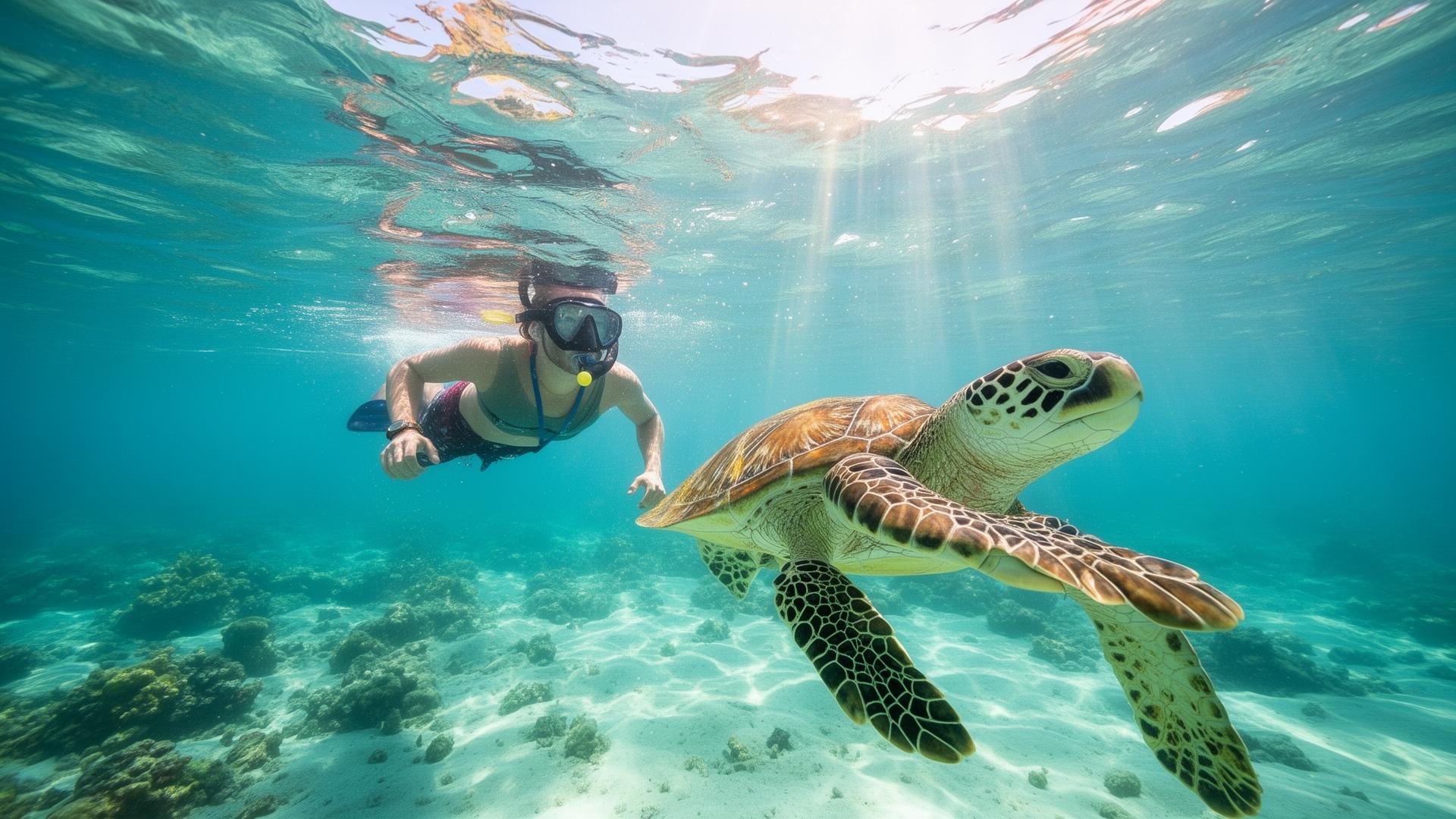
🐢 Quick Facts: Sea Turtle Snorkeling Worldwide
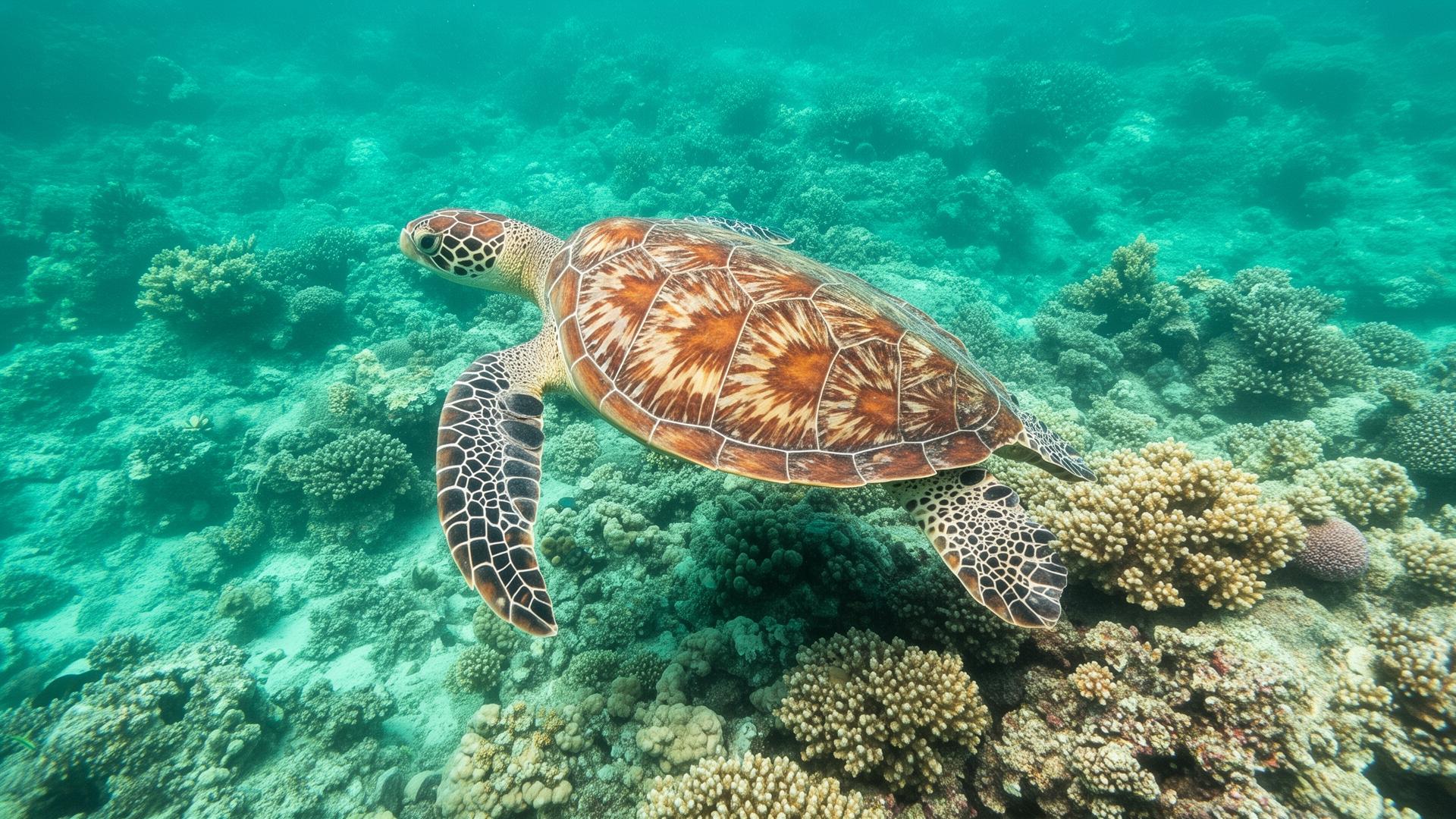
Hawaii: The Green Sea Turtle Capital
Hawaiian green sea turtles—called "honu" in Hawaiian—are revered in local culture and protected by federal law. After decades of conservation, their population has recovered dramatically, making Hawaii one of the world's most reliable places to swim with these gentle giants. The turtles are habituated to snorkelers and remarkably calm, often allowing extended observation as they graze on limu (seaweed) or rest on sandy bottoms.
Oahu: Turtle Canyon & North Shore
Turtle Canyon, off Waikiki, is Hawaii's most famous turtle snorkeling spot—a sandy-bottomed reef where dozens of green turtles congregate to feed and rest. Guided boat tours depart from Kewalo Basin Harbor and guarantee sightings. On the North Shore, Laniakea Beach (nicknamed "Turtle Beach") offers reliable shore-based viewing, though swimming with turtles here is limited due to currents.
Maui: Turtle Town
The stretch of coastline between Makena and La Perouse Bay is known as Turtle Town, featuring underwater lava formations where sea turtles gather to be cleaned by reef fish at "cleaning stations." Morning snorkel tours from Kihei offer calm conditions and the highest turtle concentrations. Molokini Crater, while famous for fish, also hosts turtle encounters on the back side of the atoll.
Big Island: Puako & Kona Coast
The Puako reef system north of Kona offers exceptional shore snorkeling with frequent turtle sightings. The Kona coast's calm conditions make it ideal for beginners, while Kealakekua Bay combines spinner dolphins, coral reefs, and sea turtles in one spectacular snorkel. Two Step (Honaunau Bay) is a local favorite with easy entry and resident turtles.
💡 Pro Tip: Hawaii
Hawaii law requires staying at least 6 feet from sea turtles—and 10 feet in some areas. Never chase, touch, or block a turtle's path to the surface (they need to breathe). The best encounters happen when you float quietly and let turtles approach you.
Galápagos Islands: Evolution's Living Laboratory
The Galápagos offers an unparalleled sea turtle experience: endemic Pacific green turtles (a genetically distinct population), marine iguanas swimming alongside you, and the complete absence of turtle wariness toward humans. In these protected waters, turtles have never learned to fear people, creating an intimacy impossible elsewhere.
Best Snorkeling Sites
Punta Vicente Roca (Isabela) combines cold upwelling water with volcanic formations, attracting turtles, penguins, and marine iguanas—an only-in-Galápagos snorkel. Bartolomé Island features the iconic Pinnacle Rock backdrop with excellent turtle sightings. Santa Fe and Floreana's Devil's Crown offer volcanic crater snorkeling with multiple turtle encounters per session.
When to Go
December through May (warm season) brings calmer, clearer water—ideal for snorkeling. Turtles are present year-round, but visibility peaks January through April. Sea turtle nesting occurs December through March on beaches throughout the islands, with hatchlings emerging February through May.
The Galápagos Difference
Galápagos snorkeling is bucket-list territory not just for turtles but for the entire ecosystem: sea lions will swim circles around you, marine iguanas graze on underwater algae, penguins dart past at impossible speeds, and reef sharks patrol the depths. Turtles become part of an overwhelming abundance rather than isolated sightings.
💡 Pro Tip: Galápagos
Book a multi-day cruise rather than land-based day trips. The best snorkeling sites (like Punta Vicente Roca) are only accessible to overnight vessels. Cruises include multiple snorkels per day with naturalist guides—the turtle encounters accumulate to dozens over a week.
Caribbean: Hawksbill & Green Turtle Haven
The Caribbean hosts five of the world's seven sea turtle species, with hawksbill and green turtles most commonly seen by snorkelers. Warm, clear water year-round, extensive reef systems, and numerous marine protected areas make this the most accessible sea turtle destination for casual snorkelers. Many encounters happen right off resort beaches.
Barbados: Swimming with Hawksbills
Barbados has become the Caribbean's premier sea turtle snorkeling destination. Carlisle Bay, on the island's calm west coast, features multiple shipwrecks surrounded by resident hawksbill turtles. The turtles are habituated to snorkelers and incredibly approachable—some tour operators report 100% sighting rates. Paynes Bay and Mullins Beach offer beach-entry alternatives.
Curaçao: Playa Grandi (Grote Knip)
At Playa Grandi, local fishermen clean their catch at the pier, attracting sea turtles who've learned to gather for scraps. This creates one of the Caribbean's most reliable and accessible turtle encounters—snorkel straight from shore and find multiple turtles within minutes. It's not pristine wilderness, but the turtles are guaranteed and remarkably tolerant.
Tobago Cays, St. Vincent & the Grenadines
This marine park in the Grenadines protects a population of green turtles in waters so clear visibility exceeds 100 feet. No fishing, no development, just uninhabited islands surrounded by turtle-filled seagrass beds. Access is by boat from Union Island or sailing charter—the effort rewards with some of the Caribbean's healthiest reef ecosystems.
Akumal, Mexico
Akumal Bay on the Riviera Maya has historically been famous for guaranteed turtle encounters, with seagrass beds just offshore hosting feeding green turtles. Note: Due to overtourism, access is now regulated—book official guided tours through the Centro Ecológico Akumal rather than walking in. The turtles remain abundant when proper protocols are followed.
💡 Pro Tip: Caribbean
Hawksbill turtles feed on sponges found on coral reefs, while green turtles graze seagrass beds. Know which habitat you're snorkeling to set expectations—green turtles in shallow sandy areas, hawksbills around coral formations.
Choosing Your Sea Turtle Snorkeling Adventure
| Destination | Primary Species | Best Season | Best For |
|---|---|---|---|
| Hawaii (Oahu/Maui) | Green Turtles | Year-round | Reliable encounters, calm water, beach vacation combo |
| Galápagos Islands | Pacific Green Turtles | Dec–May | Multi-species wildlife, fearless animals, bucket-list |
| Barbados | Hawksbill Turtles | Year-round | Shipwreck snorkeling, habituated turtles |
| Tobago Cays | Green Turtles | Dec–May | Pristine marine park, sailing adventure |
| Akumal, Mexico | Green & Loggerhead | May–Oct | Shore access, Riviera Maya convenience |
| Great Barrier Reef | Green & Hawksbill | Jun–Nov | World's largest reef system, nesting season |
Essential Gear & Preparation
Snorkel Equipment
- Mask: Bring your own for proper fit—rental masks often leak
- Snorkel: Dry-top snorkels prevent water entry in chop
- Fins: Short travel fins for maneuverability, not speed
- Rashguard: Sun protection without reef-damaging sunscreen
- Underwater camera: GoPro or waterproof phone case essential
Photography Tips
Approach turtles slowly from the side, never from directly above (mimics predator). Wait for them to exhale (creates bubble-free shots) and capture eye contact for emotional impact. Morning light creates the best underwater colors. Video often works better than photos—turtles' slow, graceful movement is inherently cinematic.
Sun Protection
Reef-safe sunscreen (zinc oxide or titanium dioxide) is now required in Hawaii, Mexico, and many Caribbean destinations. Oxybenzone and octinoxate—found in most conventional sunscreens—damage coral and can harm turtles. Better yet: wear a rashguard and minimize sunscreen on your face.
Responsible Sea Turtle Snorkeling
Sea turtles have survived 100 million years, but all seven species are now endangered or threatened. Your snorkel encounter can support conservation when done responsibly—tour fees often fund protection programs, and tourist demand creates economic incentives to preserve habitat. But irresponsible behavior causes real harm.
The Rules (They Exist for Good Reason)
- Never touch: Human contact stresses turtles and can transmit bacteria
- Keep distance: 6–10 feet minimum depending on location
- Don't chase: Let turtles come to you; chasing exhausts them
- No flash: Flash photography can startle and disorient turtles
- Don't block: Always leave clear paths to the surface for breathing
The best turtle encounters happen when you become part of the underwater environment rather than an intrusion. Float, breathe slowly, and let curiosity bring turtles to you. A turtle that chooses to swim past you—making eye contact as it glides by—is infinitely more rewarding than one you've chased into exhaustion.
More Marine Life Adventures
Love swimming with sea turtles? You'll also enjoy our guide to the world's best whale watching destinations. For the best underwater visibility, check our best snorkeling beaches ranking. Many top turtle spots are near Key West and Cancun—explore our destination guides for trip planning.