Best Beaches in Brazil
From Rio's iconic urban shores to Florianópolis's surf paradise and Bahia's tropical gems — the ultimate guide to Brazil's finest beaches.
By BeachLoco Editorial
Brazil's Greatest Beaches
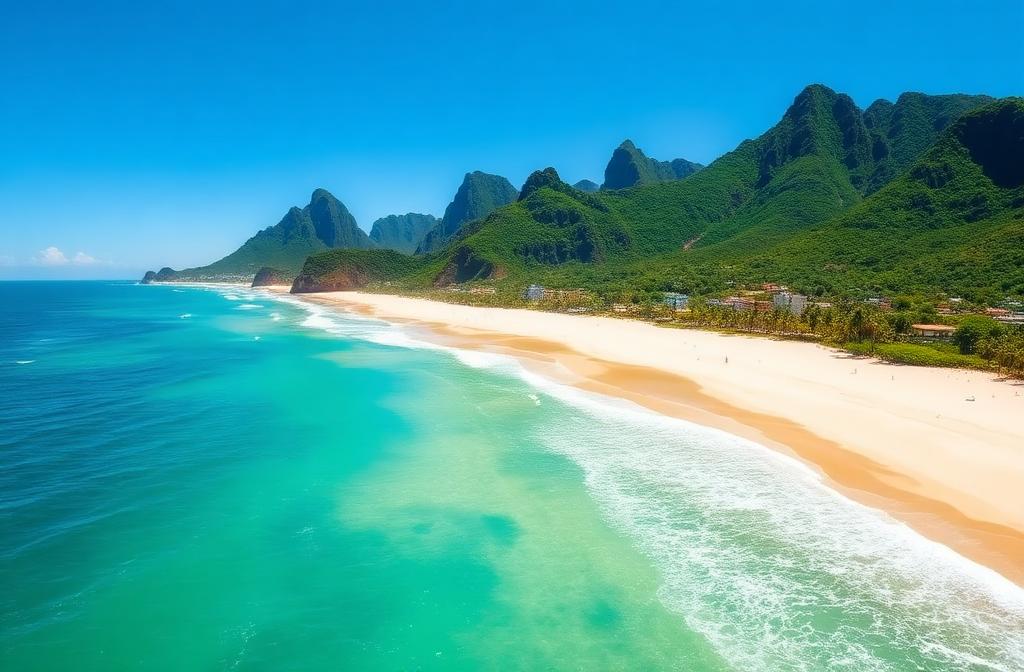
Brazil does not have a coastline so much as a civilisation built along one. Seven thousand four hundred kilometres of Atlantic shore, stretching from the equatorial mangroves of the Amazon delta to the subtropical forests of Santa Catarina — and nearly every kilometre of it is inhabited, loved, and argued about by locals who consider their home beach the finest in the country. They are all wrong, of course, and they are all right. Brazil's beach culture is not about objective rankings. It is about identity.
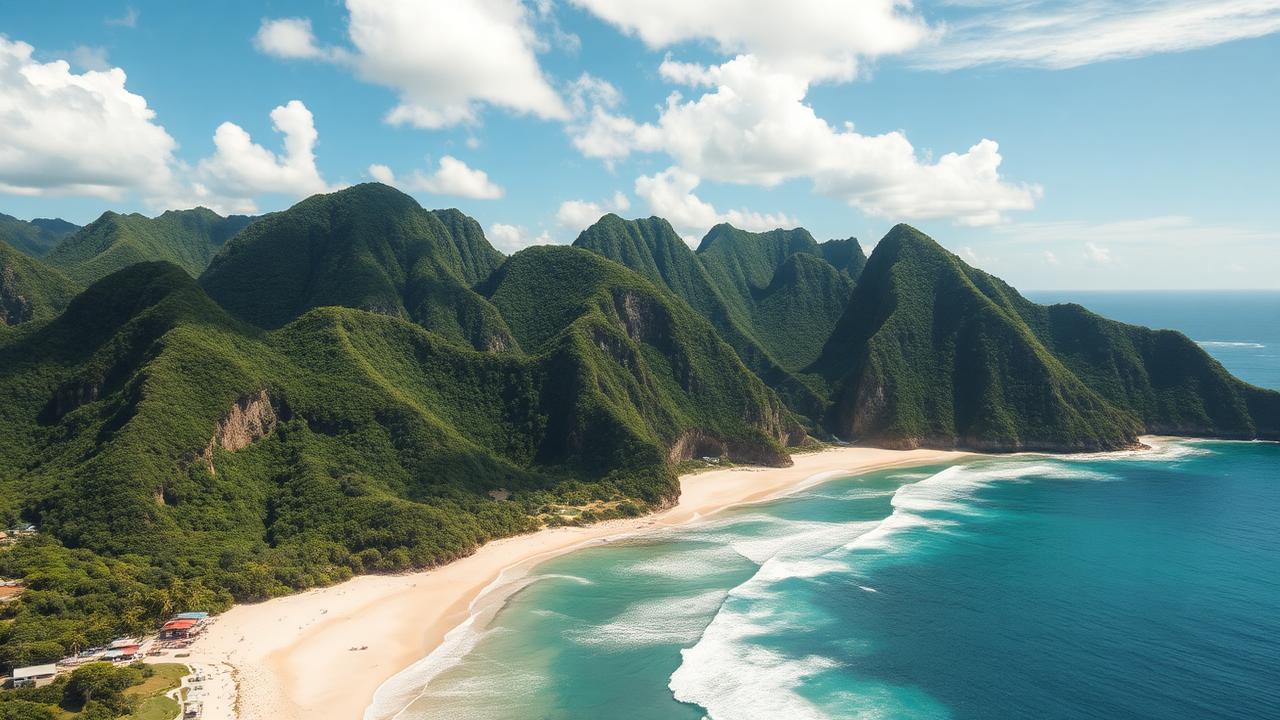
What separates Brazilian beaches from the rest of South America is integration into daily life. These are not resort destinations where tourists visit the water. They are social infrastructure — the places where business is conducted, romances begin, friendships are maintained, and Sundays are spent. To understand Brazil, you must understand its relationship with the sea. And to understand that relationship, you must visit the beaches themselves — not as a tourist passing through, but as a participant in the daily ritual of sand, salt, and sun that defines this country. For the full regional context, explore our South America destination hub.
Copacabana and Ipanema — Rio de Janeiro
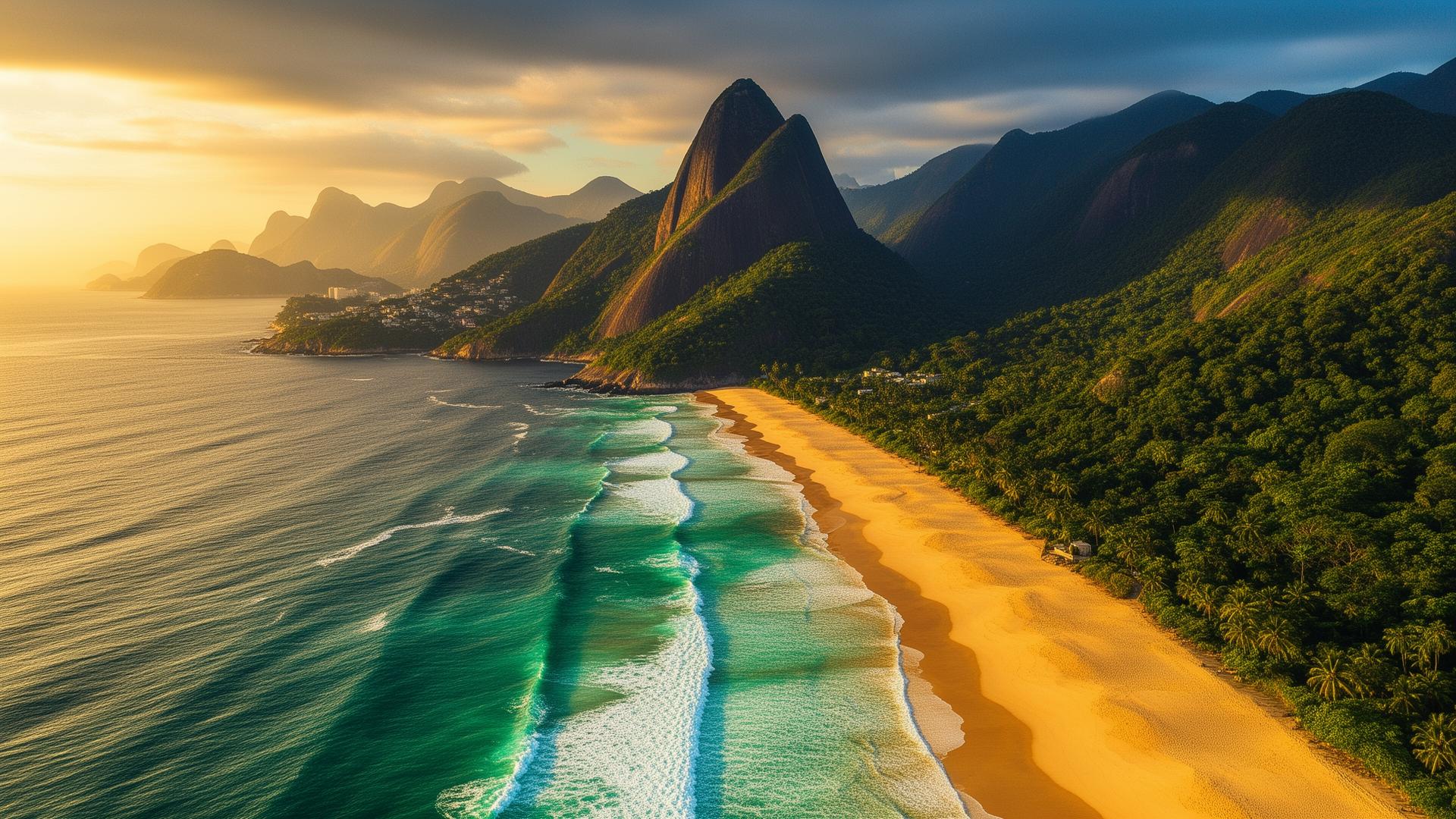
The distinction between Copacabana and Ipanema is, at its core, a question of temperament. Copacabana is the extrovert — four kilometres of wide, democratic sand where everyone from retired colonels to street vendors to backpackers share space with a cheerful disregard for social boundaries. The beach widens and narrows as you walk its length, and the character shifts with it: the Leme end (northeast) is quieter, more residential, favoured by morning swimmers. The Posto 6 section near Rua Siqueira Campos is chaotic and commercial, the heartbeat of classic Copa.
Ipanema, by contrast, is curated. Not officially — there are no velvet ropes on sand — but socially. The posto system that divides the beach into numbered sections functions as a self-organising neighbourhood map. Each section attracts its tribe with remarkable consistency. Young families near Posto 11. The surf crowd at Arpoador, where Ipanema ends and the rocks begin. The fashion-conscious and the beautiful around Posto 9 and 10, where the concentration of athletic bodies per square metre is genuinely intimidating.
The daily sunset ritual at Arpoador — where the entire crowd turns west and applauds as the sun drops behind Dois Irmãos — is not a tourist attraction. It is a genuine community moment, and it happens every evening, rain or shine, to a crowd that ranges from surfers towelling off to suited office workers who walked down from Leblon. In a city often defined by its divisions, the beach is the great equaliser.
Best time: December through March for summer energy. April and May for quieter mornings. Insider tip: Prainha, hidden behind the hills west of Rio, offers powerful beach breaks in a nature reserve setting — it is where Rio's serious surfers go. The drive from Ipanema takes 40 minutes through the Tijuca forest, and the contrast with the urban beaches is total. For nightlife recommendations, see our party beaches guide.
Florianópolis — The 42-Beach Island
Florianópolis operates on a principle of abundance. Forty-two beaches on a single island, each with its own microclimate, its own crowd, and its own reason for existing. The east coast catches Atlantic swells and draws surfers. The north coast faces away from the open ocean and offers calm, warm, family-friendly water. The south coast is wilder, less developed, and home to the beaches that require effort to reach — which is precisely why they remain worth reaching.
Joaquina is Floripa's signature surf beach — a wide, exposed strand backed by enormous sand dunes that have been shaped by centuries of coastal wind into rolling formations you can sandboard down. The wave is a powerful beach break that shifts with the sandbanks, producing heavy shore-dumping barrels when the swell is up and more manageable walls during smaller conditions. International surf competitions run here during the summer months, and the atmosphere during contest days — hundreds watching from the dune amphitheatre — is unique in Brazilian surfing.
For a completely different register, drive thirty minutes north to Daniela — a shallow, warm-water bay that extends so far at low tide you can walk hundreds of metres before the water reaches your waist. This is where Floripa's families come on weekends, and the atmosphere is all sun umbrellas, packed coolers, and children building elaborate sandcastles in water that barely ripples. The contrast with Joaquina's surf energy could not be sharper, and both are on the same island, thirty minutes apart.
Best time: December through February for warm water. June through August for powerful south swells and serious surf (bring a wetsuit). Insider tip: The trail to Lagoinha do Leste starts at Pântano do Sul — take the route via Matadeiro for the most dramatic coastal views. Budget at least three hours for the round trip, bring water, and avoid after heavy rain when the trail becomes treacherous. Read our surf guide for break-by-break timing.
Búzios — 23 Beaches on a Peninsula
Búzios is the proof that geography creates character. This narrow peninsula juts into the Atlantic from the Rio de Janeiro coastline, and its crooked shape means that its 23 beaches face every conceivable direction — catching different winds, different swells, and different light throughout the day. The practical result is remarkable: when one beach is rough, another is calm. When the east-facing beaches are in morning shadow, the west-facing ones are already sun-drenched.
Geribá is the peninsula's largest and most exposed beach — a kilometre of fine sand facing southeast, catching the prevailing Atlantic swell. It draws Búzios's surf crowd and, on weekends, day-trippers from Rio who park along the access road and walk down through dune vegetation to sand that is invariably windier and wilder than the town-side beaches. Ferradura, by contrast, is a horseshoe-shaped bay so sheltered that the water barely moves. Stand-up paddleboarding here feels like gliding across a swimming pool, and the snorkelling along the rocky edges reveals damselfish and small rays in water clear enough to read a book through.
The town itself — centred on the cobblestone Rua das Pedras — has the density of a European seaside village. Restaurants, galleries, and boutiques line a single pedestrian street that runs from the waterfront to the chapel, and the evening passeggiata (a tradition inherited from Búzios's significant Italian expat community) fills it with a well-dressed crowd from about eight o'clock onward. Dining ranges from Rocka's contemporary seafood (reserve in advance) to Chez Michou's legendary crêpes, served until the early hours.
Best time: October through December for warming weather without summer crowds. Insider tip: Take a schooner trip from the main wharf — the three-hour tour circles the peninsula and stops at three beaches for swimming. It is touristy, yes, but the coastal views from the water reveal why Búzios works as a destination: the layering of beaches, headlands, and coves creates a coastline of unusual complexity for such a small place.
Salvador — Where Culture Meets the Coast
Salvador is the most culturally significant beach city in Brazil, and possibly in South America. The first capital of colonial Brazil, the primary port of entry for enslaved Africans, and the birthplace of capoeira, candomblé, and axé music — Salvador carries more history per cobblestone than cities ten times its size. That history reaches the beach, where it manifests as drum circles on Porto da Barra, capoeira rodas on the Farol waterfront, and a food culture rooted in West African cooking traditions.
Porto da Barra is small — perhaps 500 metres of calm, sheltered water set below the Forte de Santo Antônio. It is also, by near-universal consensus, one of the best urban beaches in Brazil. The water is warm, the setting is intimate (you can see the colonial skyline of the Pelourinho from the sand), and the late-afternoon light turns everything gold. Beach vendors here sell acarajé — deep-fried bean fritters stuffed with vatapá (a rich paste of shrimp, peanut, and palm oil) — and the best of them attract lines that extend across the sand.
Beyond the city, the Bahian coast stretches north through a series of resort beaches (Guarajuba, Imbassaí) that offer wider sand and calmer conditions. Further afield, the Coconut Coast (Costa dos Coqueiros) delivers some of Brazil's most photogenic beach landscapes — long strips of white sand backed by coconut palms, with small fishing villages that operate on their own clock. Praia do Forte, about an hour north, combines beach time with a sea turtle conservation project that has become one of Bahia's most popular family attractions.
Best time: December through March for warmest water. Salvador's Carnival is the world's largest street party — extraordinary but chaotic. Insider tip: Tuesday nights in Pelourinho feature the 'Bênção' — free live music flowing through colonial streets. Go hungry: the street food vendors set up alongside the musicians, and the combination of axé rhythms and fresh acarajé is Salvador at its purest. For budget tips, see our cheapest destinations guide.
Fernando de Noronha — The Pristine Archipelago
Fernando de Noronha is not a typical beach destination. This volcanic archipelago, 350 kilometres off Brazil's northeast coast, limits daily visitors, charges a preservation tax that increases with length of stay, and offers accommodation that ranges from modest pousadas to a single luxury eco-resort. It is expensive, remote, and worth every bit of both.
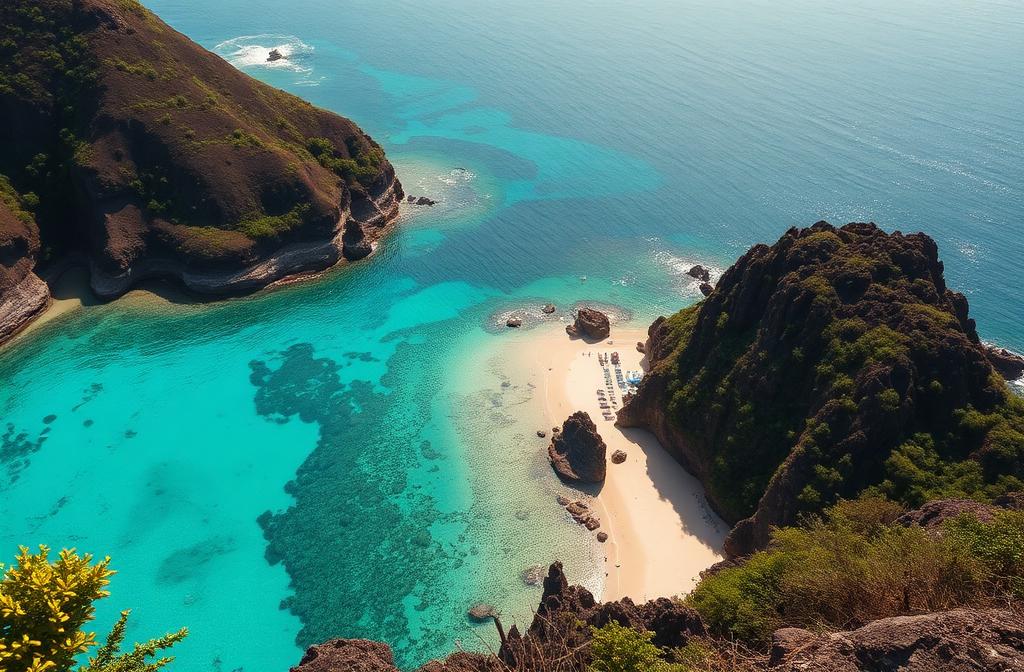
Praia do Sancho — accessible by descending through a crack in the cliff face via a series of fixed ladders — is consistently rated the world's best beach by traveller surveys, and for once, the ranking is difficult to argue with. The bay is a crescent of fine golden sand enclosed by volcanic walls covered in green vegetation, with water so clear that the depth is deceiving. Spinner dolphins play in the bay most mornings, visible from the clifftop viewpoint before you make the descent. The experience of climbing down through the rock, emerging onto an almost-empty beach, and swimming in water of this clarity is genuinely unforgettable.
Baía dos Porcos, a fifteen-minute walk from Sancho along a rocky trail, offers a smaller, rockier beach with a natural pool formed by volcanic boulders. At high tide, the pool fills with warm, calm water teeming with tropical fish — snorkelling here requires nothing more than a mask and the willingness to get in. Cacimba do Padre, on the island's more exposed side, catches solid Atlantic swells and hosts Brazilian surf championships when conditions align.
Best time: August through December for the clearest water and driest weather. The preservation tax starts at around R$100 per day and increases after a few days — plan accordingly. Insider tip: Book the 'Ilha Tour' — a jeep circuit of the island with stops at viewpoints, tide pools, and the historical fort. It is the most efficient way to see the archipelago's geography and to identify which beaches deserve your return visits. For more remote beaches across the continent, read our hidden beaches guide.
Planning Your Brazil Beach Trip
Brazil rewards the traveller who picks a region rather than trying to cover the entire coast. Rio combined with Búzios is a natural three to five day pairing. Florianópolis deserves a week on its own — you will not run out of beaches. Salvador plus the Bahian coast makes an excellent week of culture and beach. Fernando de Noronha is a standalone trip that justifies its own flights.
For the complete South America beach picture — including Colombia, Ecuador, and Peru — explore our South America pillar guide. For timing advice, read our best time to visit guide. And to compare Brazil's beaches with Caribbean alternatives, see our detailed comparison.