Iron Bottom Sound: The Ultimate Guide to WWII Diving in the Solomon Islands
Discover the world's largest collection of accessible WWII wrecks in Iron Bottom Sound. From the USS Quincy to Kennedy Island's PT-109 story, explore 50+ sunken warships and 800 aircraft in these hallowed Pacific waters.
By BeachLoco Editorial Team
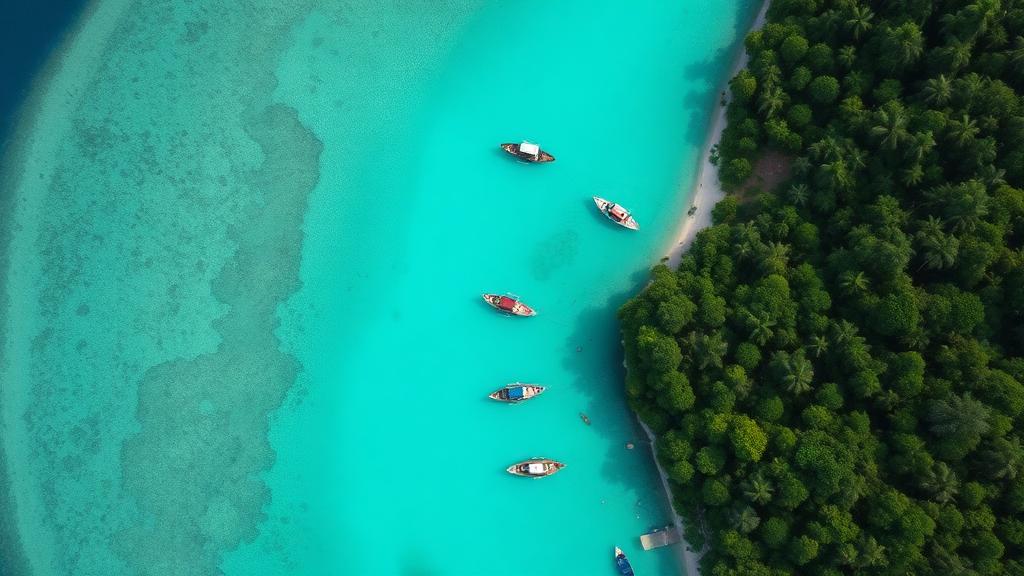
More than fifty warships and eight hundred aircraft lie beneath these waters—the final resting place of sailors and airmen from the brutal Guadalcanal Campaign of 1942-43. Iron Bottom Sound earned its haunting name because so many ships sank here that the seafloor is literally paved with iron. Today, this underwater memorial offers the most significant WWII wreck diving in the world, where history and marine life intertwine in crystal-clear Pacific waters.

Quick Facts: Iron Bottom Sound Diving
Why Iron Bottom Sound Matters
Between August 1942 and February 1943, one of the most brutal campaigns of the Pacific War played out in and around Guadalcanal. The Allied offensive to capture Henderson Field sparked seven major naval battles in the narrow waters between Guadalcanal, Savo Island, and Florida Islands. More than 5,000 sailors from both sides lost their lives in these engagements.
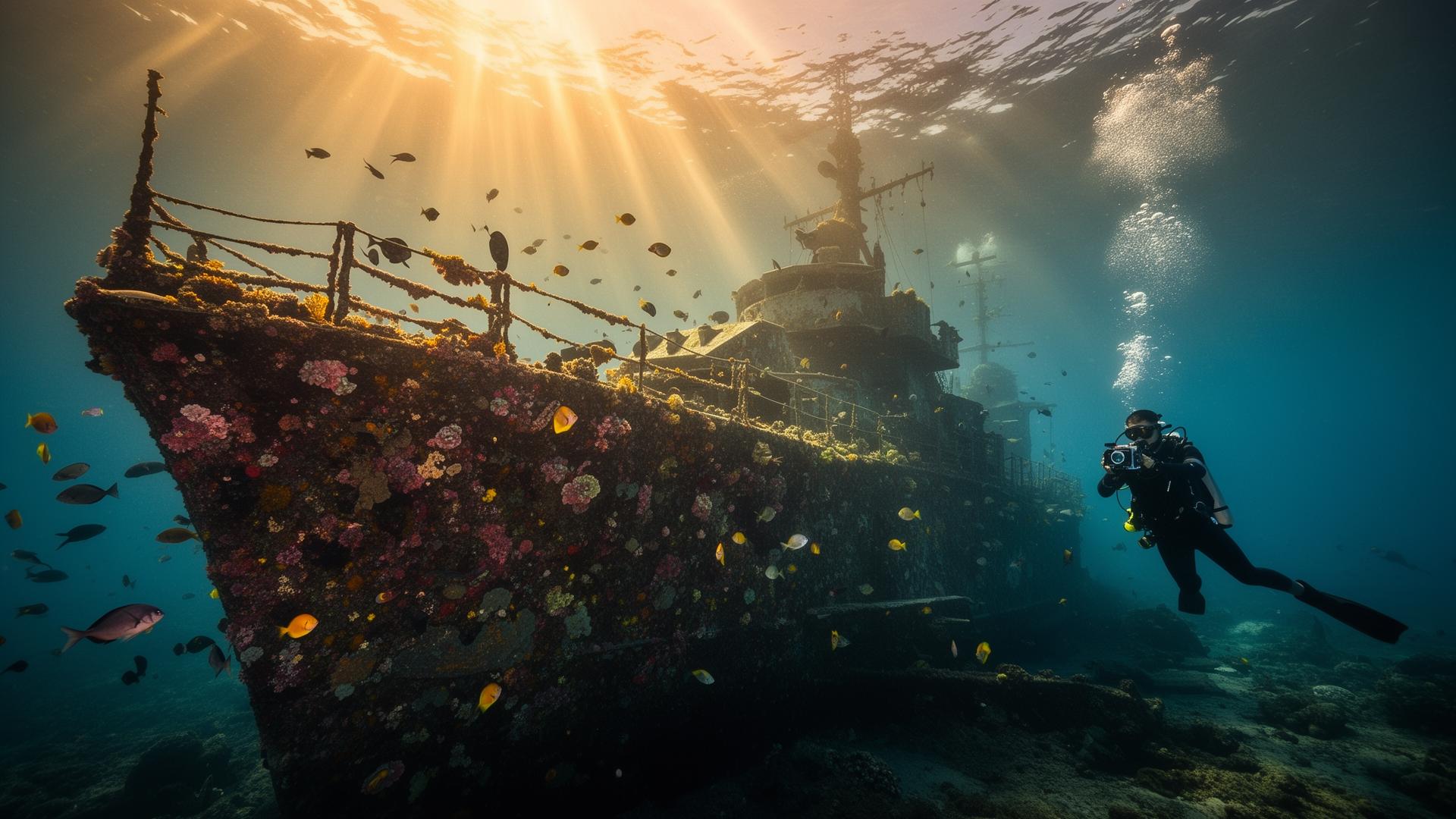
The seafloor became so littered with sunken vessels that Allied sailors grimly renamed it "Iron Bottom Sound." Today, this underwater graveyard offers wreck divers something impossible to find anywhere else: dozens of intact warships from both sides, spanning cruisers, destroyers, transports, and submarines, many within recreational diving depths.
The Solomon Islands have preserved these sites as war memorials while allowing respectful diving access. Unlike the Mediterranean or Caribbean where storms and salvage operations scattered wrecks, the Pacific's warm, calm waters have kept these ships remarkably intact for over 80 years.
Who Is This Guide For?
- Advanced wreck divers — Seeking historically significant dive sites with penetration opportunities
- WWII history enthusiasts — Who want to witness history firsthand rather than read about it
- Underwater photographers — Capturing coral-encrusted warships in pristine visibility
- Adventure divers — Checking off bucket-list experiences in remote destinations
- JFK history buffs — Exploring Kennedy Island where the future president survived PT-109's sinking
Pro Tips for Iron Bottom Sound
- Book with specialized operators — Tulagi Dive and Dive Munda know these sites intimately
- Bring a dive light — Interior penetration requires proper illumination
- Respect the sites — These are war graves; never remove artifacts or disturb remains
- Plan recovery days — Many sites are deep; schedule nitrogen off-gassing time
The Guadalcanal Campaign: Historical Context
On August 7, 1942, U.S. Marines landed on Guadalcanal in the first major Allied offensive against Japan. The Japanese had been building an airfield—later named Henderson Field—that would threaten Australia and Allied shipping lanes. What followed was six months of desperate fighting on land, sea, and air.
The Japanese responded with relentless counterattacks. The "Tokyo Express"—fast destroyer runs down "The Slot"—delivered troops nightly. Naval battles erupted with shocking frequency: Savo Island, Cape Esperance, Santa Cruz, Naval Battle of Guadalcanal. Both sides lost roughly 24 major warships each, plus countless smaller vessels and aircraft.
By February 1943, Japan evacuated its remaining forces, conceding the first major Allied victory in the Pacific. The cost in ships created the diving wonderland that exists today.
Top Dive Sites in Iron Bottom Sound
1. Bonegi I & Bonegi II (Japanese Transport Ships)
Depth: 10-90 feet | Level: Open Water and above
The most accessible wrecks in Iron Bottom Sound, these Japanese transport ships sit within a short boat ride from Honiara. Bonegi I (Hirokawa Maru) rests in just 10-60 feet of water—perfect for beginners and snorkelers. The bow section breaks the surface. Bonegi II lies nearby in 30-90 feet, offering deck penetration and abundant marine life. Both ships are covered in hard and soft corals, swarming with tropical fish.
Highlights: Accessible shore dives, excellent coral growth, anti-aircraft guns still mounted, engine room penetration on Bonegi II.
2. USS Quincy, USS Astoria & USS Vincennes
Depth: 1,000-2,500+ feet | Level: Technical/Submersible only
Three American heavy cruisers sunk in the disastrous Battle of Savo Island on August 9, 1942—the worst naval defeat in U.S. history. While far too deep for recreational diving, submersible expeditions have documented these ships. For divers, the Savo Island area above these wrecks offers excellent diving with the knowledge of what lies below.
3. I-1 Japanese Submarine
Depth: 65-100 feet | Level: Advanced Open Water
This 320-foot Japanese submarine ran aground on a reef near Cape Esperance in January 1943 while running supplies to Japanese troops. Australian corvettes shelled it until the crew abandoned ship. Today, the conning tower rises to 65 feet, with the hull extending down a coral slope. Divers can explore the deck guns, periscope housings, and see into the submarine's interior.
Highlights: Intact conning tower, deck guns, excellent visibility, historical significance as a failed supply run.
4. B-17 Flying Fortress Bomber
Depth: 100-110 feet | Level: Advanced Open Water
An intact B-17 heavy bomber rests on a sandy bottom, remarkably preserved with all four engines in place. The cockpit is accessible, and the aircraft's distinctive silhouette is unmistakable. Surrounding sand provides excellent visibility and photography opportunities.
Highlights: Complete aircraft profile, four radial engines, accessible cockpit, dramatic photography subject.
5. Japanese Mini Submarines
Depth: 40-80 feet | Level: Open Water and above
Several Type A Ko-hyoteki midget submarines lie in diveable depths around Guadalcanal. These 78-foot vessels were designed for two-man crews and harbor attacks. Some retain their torpedoes, making them eerily complete time capsules.
6. PT Boat Wrecks
Depth: Various | Level: Various
Multiple PT boat wrecks dot the sound, though most are deeper or more scattered than the larger vessels. These fast patrol boats played crucial roles in the night battles that characterized the campaign.
✈️ Book Flights to Solomon Islands
Find the best fares to Honiara (HIR) from Brisbane, Port Moresby, and Fiji
Search Flights →Kennedy Island & the PT-109 Story
On August 2, 1943, the Japanese destroyer Amagiri sliced through PT-109 in the darkness of Blackett Strait near Gizo Island. The boat's commander, 26-year-old Lieutenant (j.g.) John F. Kennedy, led his surviving crew on an epic swim to a tiny island, towing a badly burned crewman by clenching his life vest strap in his teeth.
That island—now called Kennedy Island (formerly Plum Pudding Island)—became their refuge. With no food or fresh water, Kennedy swam out night after night searching for friendly PT boats. Eventually, they made contact with coast watcher natives who delivered Kennedy's famous coconut shell message: "NAURO ISL...COMMANDER...NATIVE KNOWS POS'IT...HE CAN PILOT...11 ALIVE...NEED SMALL BOAT...KENNEDY."
The rescue came on August 8, 1943. Kennedy's heroism earned him the Navy and Marine Corps Medal and launched a political career that would lead to the White House. Today, visitors can kayak or boat to Kennedy Island, walk its sandy beaches, and swim the waters where a future president fought for survival.
Visiting Kennedy Island Today
- Getting there: Day trips from Gizo (1-2 hours by boat) or from Munda
- What to see: The small island, memorial plaque, surrounding waters
- Diving nearby: PT-109's wreckage lies in deep water, but surrounding reefs offer excellent diving
- Combine with: Gizo Island diving, WWII sites around Munda
🤿 Book Diving Tours & Activities
Explore WWII wrecks with experienced local dive operators
Browse Diving Tours →How to Get There
International Flights to Honiara
Honiara International Airport (HIR) receives flights from:
- Brisbane, Australia — Solomon Airlines (3 hours)
- Port Moresby, Papua New Guinea — Air Niugini (2 hours)
- Nadi, Fiji — Fiji Airways (3 hours)
- Port Vila, Vanuatu — Solomon Airlines (2 hours)
Domestic Connections
For Western Province diving (Gizo, Munda, Kennedy Island), connect through Honiara to Munda (MUA) or Gizo (GZO) on Solomon Airlines domestic flights.
Dive Operators
- Tulagi Dive — Based on Tulagi Island, specializing in Iron Bottom Sound wrecks
- Dive Munda — Western Province operator with access to Kennedy Island sites
- Dive Gizo — Gizo-based operator for western wreck and reef diving
Best Time to Visit
Dry Season (April–November)
Optimal conditions with minimal rainfall, calm seas, and visibility often exceeding 100 feet. Water temperature remains a comfortable 82-86°F year-round. This is peak season for diving, though the Solomon Islands never see crowds comparable to more popular destinations.
Wet Season (December–March)
Higher rainfall and occasional cyclone risk, but diving remains possible. Visibility may decrease to 40-60 feet after heavy rains. Lower prices and fewer visitors compensate for less predictable conditions.
Skill Levels & Safety Considerations
Open Water Certified
- Bonegi I (upper sections)
- Japanese mini submarines (shallower examples)
- Reef diving throughout the islands
Advanced Open Water
- Bonegi II (full exploration)
- I-1 submarine
- B-17 bomber
- Most wreck penetration
Technical/Cave Certified
- Deep wrecks beyond 130 feet
- Extended penetration diving
- Decompression diving
Safety Notes
- Current conditions: Tidal currents can be strong; always dive with local guides
- Depth management: Many sites tempt divers deeper; watch your air and no-deco limits
- Artifact prohibition: Removing artifacts is illegal and disrespectful—these are war graves
- Hyperbaric chamber: The nearest recompression chamber is in Honiara; dive conservatively
What to Bring — Packing Essentials
Dive Gear
- ✓ Primary dive light + backup
- ✓ SMB and reel
- ✓ Dive computer (Nitrox capable)
- ✓ Wetsuit (3mm) or rash guard
- ✓ Reef-safe sunscreen
Photography
- ✓ Wide-angle lens for wrecks
- ✓ Video lights/strobes
- ✓ Extra batteries & cards
- ✓ Dry bag for boat transfers
- ✓ Red filter for ambient light
Health & Safety
- ✓ Dive insurance (DAN recommended)
- ✓ Antimalarials (consult doctor)
- ✓ Basic first aid kit
- ✓ Motion sickness meds
- ✓ Waterproof document bag
Travel Essentials
- ✓ Valid passport (6+ months)
- ✓ Cash (USD or AUD widely accepted)
- ✓ Copies of dive certifications
- ✓ Power adapters (Australian plugs)
- ✓ Lightweight rain jacket
🏨 Book Accommodations in Solomon Islands
Stay in Honiara, Gizo, or dive resorts throughout the islands
Search Hotels →Sample 7-Day Itinerary
Solomon Islands WWII Diving Week
Day 1: Arrive Honiara, check into hotel, orientation dive at Bonegi I
Day 2: Two-tank dive: Bonegi II + I-1 submarine
Day 3: B-17 bomber dive + Japanese mini sub site, afternoon land tour of WWII sites
Day 4: Fly to Gizo, afternoon reef dive orientation
Day 5: Kennedy Island day trip + surrounding reef diving
Day 6: Morning wreck dive, afternoon Marovo Lagoon excursion
Day 7: Return flight via Honiara, departure
Editorial Moment: Diving Iron Bottom Sound changes something in you. As you descend onto a coral-encrusted hull, fish darting through what were once battle stations, the weight of history presses as surely as the water pressure. These ships aren't attractions—they're underwater cathedrals honoring the young men who never surfaced. You become, for a moment, a witness to their sacrifice. When you ascend, the sun on your face feels different. You've touched something sacred.
Explore More Pacific Diving Destinations
Love wreck diving and pristine Pacific waters? Explore these related destinations:
- Palau — Legendary WWII wrecks in Truk Lagoon plus world-class reef diving
- Fiji — Soft coral capital of the world with shark diving and remote islands
- Vanuatu — SS President Coolidge wreck diving and volcanic adventures
- Cook Islands — Crystal visibility and Polynesian culture